
Career in Digital Marketing: Skills, Salary, and Growth

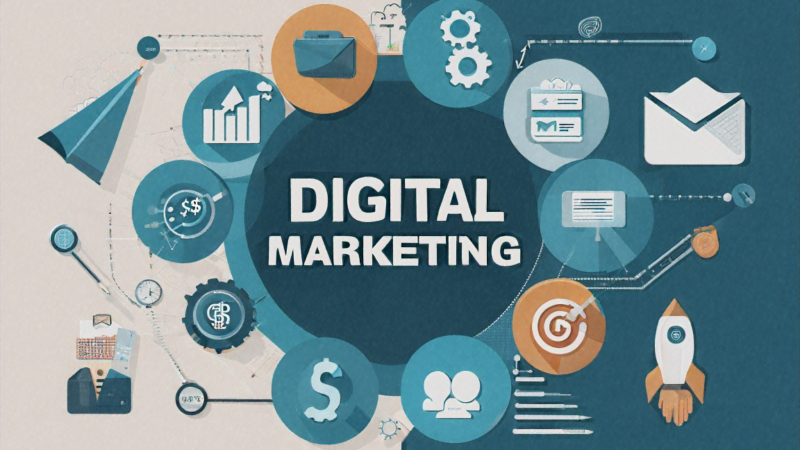
Is digital marketing actually a good career in India, or is it just something that coaching institutes keep hyping because they need students to enroll?
I asked myself that question about four years ago. Since then, I’ve worked in the space, talked to dozens of people at various levels, and watched the industry change pretty dramatically. My answer now is more nuanced than a simple yes or no, but on balance, I think digital marketing is one of the most accessible and rewarding career paths you can choose in India right now. Let me explain why, and also where the picture isn’t as rosy as the ads make it seem.
The Numbers Behind the Hype
India has over 900 million internet users as of 2026. That number was around 500 million five years ago. Every one of those users is reachable through digital channels, and businesses know it. Marketing budgets across India have been shifting from traditional media, your newspapers, TV spots, and billboards, to digital channels for years now, and that shift isn’t slowing down.
The Indian digital advertising market alone is worth something like 50,000 crore rupees, and the broader digital marketing industry, including agencies, freelancers, and in-house teams, is projected to cross 1,39,000 crore by 2027. That’s a lot of money flowing through the system, and it creates a lot of jobs.
From local businesses running Instagram ads to sell sweets in Jaipur, to multinational corporations running multi-crore Google Ads campaigns from their Gurgaon offices, the demand for people who understand digital marketing spans literally every size and type of business.
What Digital Marketing Actually Means Day-to-Day
Here’s something that confused me early on. “Digital marketing” isn’t one job. It’s an umbrella term for maybe a dozen different specializations, and most people end up focusing on one or two of them rather than doing everything.
SEO (Search Engine Optimization) is about making websites rank higher in Google search results. You’re doing keyword research, figuring out what people are searching for, optimizing web pages so Google understands and ranks them, building backlinks from other websites, and fixing technical issues that affect how search engines crawl a site. Tools of the trade include Google Search Console (free), Ahrefs, SEMrush, and Moz (paid, and not cheap). SEO is slow. Results take months, sometimes six months or more. But when it works, it drives traffic that you don’t have to pay for every day, unlike ads.
PPC (Pay-Per-Click) Advertising is the opposite end of the spectrum. You pay for every click. Google Ads, Facebook Ads, Instagram Ads, LinkedIn Ads. The skill here is knowing how to target the right audience, write ad copy that gets clicks, design landing pages that convert visitors into customers, and manage budgets so you’re not burning money. PPC gives you immediate results but requires constant optimization. A badly run campaign can waste lakhs in days.
Social Media Marketing goes beyond just posting pictures on Instagram. It involves understanding platform algorithms, creating content calendars, building communities, managing brand reputation, running influencer campaigns, and analyzing engagement data. Each platform, Instagram, Facebook, LinkedIn, Twitter, YouTube, has its own dynamics and best practices. What works on LinkedIn won’t work on Instagram, and vice versa.
Content Marketing is about creating stuff, blog posts, videos, podcasts, infographics, ebooks, that people actually want to consume. The goal is to attract an audience organically, build trust, and eventually convert some of that audience into customers. It’s closely tied to SEO because well-written content that targets the right keywords drives search traffic.
Email Marketing sounds old-fashioned but it’s still one of the highest-ROI channels. Building email lists, designing campaigns, setting up automation sequences, writing subject lines that get opened. Tools like Mailchimp, ConvertKit, and SendGrid power most of this. A good email marketer can directly tie their work to revenue numbers, which makes the job quite secure.
Analytics ties everything together. Google Analytics 4, Facebook Pixel, UTM tracking, conversion attribution, A/B testing. Without analytics, you’re guessing. With it, you can tell exactly which campaigns are making money and which are wasting it. This is maybe the most underrated specialization in digital marketing. People who can read data and translate it into actionable recommendations are always in demand.
Salary: What People Actually Earn
Okay, money talk. I’m going to be straight about this because there’s a lot of inflated salary information floating around.
Freshers and interns: 2-4 LPA. Your first digital marketing job will probably be titled something like “Social Media Executive,” “Content Writer,” “SEO Trainee,” or “Digital Marketing Intern.” Pay at this level isn’t impressive. In Bangalore or Mumbai, 2-3 LPA barely covers rent and food. In smaller cities, it goes a bit further. The first year or two is really about learning, not earning.
2-4 years experience: 5-10 LPA. This is where things start to pick up. With a couple of years under your belt and some demonstrated results, you can move into roles like “Digital Marketing Executive,” “PPC Specialist,” “SEO Analyst,” or “Content Marketing Manager.” Companies are willing to pay more at this level because you’ve moved past the training phase and can run campaigns independently. I know SEO analysts in Bangalore pulling 8-9 LPA at this experience level, and PPC specialists managing large ad budgets earning even more.
5-8 years experience: 12-20 LPA. Mid-senior roles. “Digital Marketing Manager,” “Performance Marketing Lead,” “SEO Manager,” “Head of Content.” At this level, you’re probably managing a team, setting strategy, and being held accountable for ROI targets. The jump from 10 to 15+ LPA often happens when you can prove that your campaigns directly generated revenue. Bringing data to salary negotiations is probably the single most effective thing you can do in this field.
8+ years or Head of Digital: 25-50 LPA. These are leadership positions. “VP of Marketing,” “Head of Growth,” “CMO,” “Director of Digital.” At this level, you need both deep expertise in at least one area and broad understanding of all digital channels. You’re working with C-suite executives, managing multi-crore budgets, and driving company-wide marketing strategy. Not everyone reaches this level, and the competition is fierce, but the money is genuinely good.
Freelancing: this is where some people really cash in. Experienced freelance digital marketers, especially those who specialize in Google Ads or SEO for specific industries, can charge 50,000 to 2,00,000 per month per client. With three to five clients, that’s a very comfortable income. But freelancing has its own challenges, like inconsistent income, client management headaches, and the constant need to find new business.
Certifications That Actually Matter
The digital marketing world is flooded with certifications. Some are worth your time. Many aren’t. Here’s my honest take.
Google certifications (free). Google Ads Certification through Google Skillshop and Google Analytics Certification are both free and widely recognized. If you’re applying for PPC or analytics roles, having these on your resume is basically expected. They’re not hard to get, maybe a week of study each, but they demonstrate baseline competence.
Google Digital Marketing & E-commerce Certificate on Coursera. This is a more in-depth program that covers multiple areas. It’s not free, but Coursera offers financial aid. Good for building foundational knowledge if you’re entering the field. Looks decent on a resume for entry-level positions.
HubSpot Inbound Marketing Certification (free). HubSpot’s certifications are well-regarded in the content and inbound marketing space. They’re free, well-structured, and teach you a specific methodology that a lot of companies follow. Probably the best free certification outside of Google’s offerings.
Meta Blueprint Certification. If you’re going into social media marketing or Facebook/Instagram advertising specifically, this is the one to get. It’s from Meta directly and covers their ad platform in depth.
Paid courses from IIDE, Digital Vidya, or Simplilearn. These are structured programs that typically cost 50,000-1,50,000 rupees and run for three to six months. They’re useful if you want a structured learning path with mentorship and placement assistance. I think they’re most valuable for complete career changers who need both knowledge and job placement support. If you’re already in the field and just want to upskill, the free certifications plus hands-on experience are probably sufficient.
From what I’ve seen, certifications open doors but experience closes deals. A candidate with two years of managing real campaigns and measurable results will beat a candidate with five certifications and no practical experience every single time.
Getting Started: What I Wish Someone Had Told Me
You don’t need permission to start doing digital marketing. That’s maybe the best thing about this field. You can start today with zero investment.
Start a blog about something you genuinely care about and learn SEO by trying to rank it. Run a small Instagram page for a local business in exchange for a testimonial. Set up a Google Ads account with a small budget, even 5,000 rupees, and run a campaign to learn how it works. Create a YouTube channel and learn video SEO.
Every one of these experiments teaches you something practical that you can put on your resume and discuss in interviews. “I grew an Instagram page from 0 to 5,000 followers in three months using organic strategies” is a more powerful resume line than “Completed Digital Marketing certification from XYZ Institute.”
Employers in this field care about what you’ve done more than what you’ve studied. I can’t stress this enough. Build a portfolio of projects, campaigns, and results. Even if they’re small. Even if they’re personal projects. Show that you can actually do the work.
Agency vs. In-House vs. Freelance: Picking Your Path
One thing nobody tells freshers is that where you work in digital marketing matters almost as much as what you do. The experience at a digital agency is wildly different from working in-house at a brand, and freelancing is a whole other world.
Agencies are intense. You’re juggling multiple clients, switching between a restaurant’s Instagram strategy and a fintech company’s Google Ads campaign in the same afternoon. The pace is fast, the deadlines are tight, and the learning is accelerated because you’re exposed to so many different industries and challenges. Most agencies in India, places like Dentsu, WATConsult, Performics, Webchutney, Schbang, and hundreds of smaller ones, hire freshers aggressively. The pay at the entry level is on the lower end, maybe 2.5-4 LPA, but the breadth of experience you get in two years at an agency is hard to replicate anywhere else. The downside? Burnout is real. Agency hours in India can be brutal, with client calls extending into evenings and weekends, especially when you’re managing brands that run campaigns around festivals and sales events.
In-house roles at brands are more focused. You’re working on one brand, one product line, one target audience. You go deeper instead of broader. The pace is generally more manageable, and the pay tends to be better than agencies at equivalent experience levels. Companies like Nykaa, Mamaearth, boAt, Zomato, Swiggy, and most D2C brands have built substantial in-house marketing teams. The trade-off is that you might not get the variety of challenges that an agency provides, and your skills can become narrow if you stay at one company too long.
Freelancing is where the income ceiling is highest but the floor is also lowest. I know a freelance SEO consultant in Bangalore who charges 1.5 lakh per month per client and manages four clients. That’s 6 LPA from just those four relationships, and she works from home in whatever schedule she wants. But I also know freelancers who struggle to find consistent clients and go months between projects. Freelancing works best after you’ve built three to five years of experience and have a specific niche. “I do social media” is too broad. “I run performance marketing campaigns for D2C beauty brands” is a freelance pitch that gets clients.
The Daily Routine Nobody Warns You About
I want to give you a realistic picture of what a day looks like in different digital marketing roles, because the Instagram reels about “digital marketing lifestyle” tend to show people in cafes with laptops and skip the parts about staring at spreadsheets for two hours.
An SEO analyst’s day might start with checking Google Search Console for any sudden drops in traffic or crawl errors. Then reviewing keyword rankings to see what moved up or down overnight. Then maybe writing content briefs for blog posts, doing a technical audit of a website’s page speed, or reaching out to other websites for backlinks. SEO is a slow game. You might work on something for three months before you see measurable results. That requires patience that not everyone has.
A performance marketer running Google Ads probably starts the day checking campaign performance from the previous day. What was the cost per acquisition? Which ad groups are overspending? Which keywords are converting and which are just burning budget? Then there’s ad copywriting, landing page testing, audience segmentation, and the constant tinkering with bidding strategies. It’s very numbers-driven. If you don’t enjoy looking at data and making decisions based on it, performance marketing will drive you crazy.
A social media manager’s day revolves around content. Creating posts, scheduling them, responding to comments and DMs, monitoring brand mentions, coordinating with designers and videographers, and analyzing engagement metrics. During campaign launches or crisis situations, social media managers are importantly on call. One viral negative tweet about your brand and your evening plans go out the window.
None of this is glamorous. It’s work. Interesting work, rewarding work, but definitely work. The people who thrive in digital marketing are the ones who enjoy the combination of creativity and data analysis, and who don’t mind that the space changes constantly. What worked last quarter might not work this quarter, and you need to be okay with that constant evolution.
Building a Career When You Don’t Have a Marketing Degree
Here’s something genuinely cool about digital marketing. It doesn’t care about your degree. I’ve met successful digital marketers who studied engineering, commerce, arts, science, hotel management, and even medicine before switching tracks. Nobody in a job interview has ever asked me what my college major was when I was applying for digital marketing roles. They asked me what campaigns I’d run, what results I’d achieved, and what tools I knew.
If you’re coming from a completely different field, here’s a realistic timeline for transitioning. Months one through three: take one or two online courses to build foundational knowledge, get your Google certifications, and start a personal project like a blog or Instagram page. Months three through six: apply for internships or entry-level roles, even if the pay is low, because you need real campaign experience on your resume. Months six through twelve: by now you should have enough hands-on experience to apply for proper junior roles with confidence. Within two years of focused effort, most career changers I know were earning 5-8 LPA in digital marketing, regardless of their educational background.
The barrier to entry is genuinely low, which is both the opportunity and the challenge. Low barriers mean more competition at the entry level. Standing out requires building a portfolio that proves you can do the work, not just that you completed a course about it.
The Growth Trajectory and Future
One thing I genuinely love about digital marketing as a career is the optionality. You can go deep into a specialization, becoming one of the best SEO people in the country, for example. Or you can go broad, becoming a full-stack marketer who can handle everything. You can work in-house at a brand, join an agency, freelance, start your own agency, or build your own business using the marketing skills you’ve developed.
AI is changing the field rapidly. Tools like ChatGPT, Jasper, and MidJourney are automating parts of content creation. Google’s AI-powered search is changing how SEO works. Automated bidding in Google Ads is replacing some of the manual optimization work that PPC specialists used to do.
Does that mean digital marketing jobs will disappear? I don’t think so. But the nature of the work is shifting. The low-skill, task-execution stuff, writing basic blog posts, scheduling social media posts, manually adjusting ad bids, that’s getting automated. The high-skill, strategic stuff, understanding consumer psychology, developing campaign strategies, interpreting data to make decisions, managing brand positioning, that’s getting more valuable.
D2C brands are booming in India. E-commerce keeps growing. Social commerce on Instagram and WhatsApp is creating entirely new marketing channels. Companies are spending more on performance marketing than ever before. And every one of these trends needs people who understand digital marketing.
I think the field will look pretty different in five years. More AI-assisted, more data-driven, probably more specialized. But the demand for people who can connect businesses with customers through digital channels isn’t going anywhere. If anything, it’s growing. And for anyone willing to keep learning and adapting, the career opportunities in digital marketing in India are going to keep getting better.

Rajesh Kumar
Senior Career Counselor
Rajesh Kumar is a career counselor and job market analyst with over 8 years of experience helping job seekers across India find meaningful employment. He specializes in government job preparation, interview strategies, and career guidance for freshers and experienced professionals alike.


Comments
Be the first to leave a comment on this article.