
Career Opportunities in Electric Vehicle Industry in India

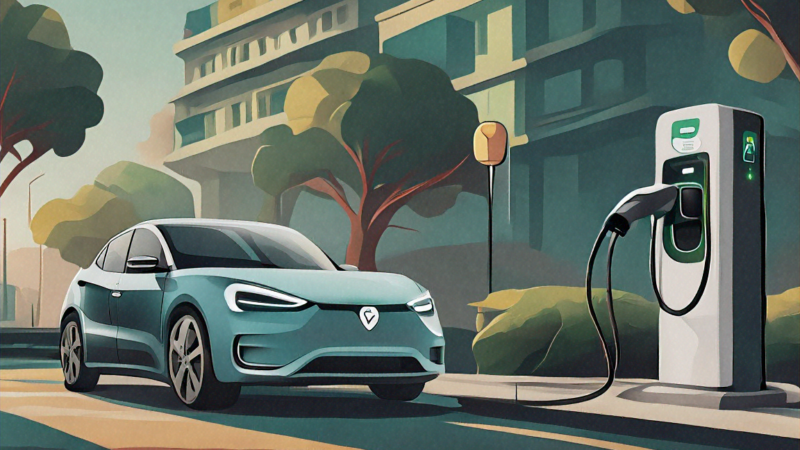
Between 2022 and 2025, India went from producing around 300,000 electric vehicles a year to crossing 3.5 million. That’s not a gradual climb. That’s a vertical line on a graph. And behind every single one of those vehicles sits a job that didn’t exist ten years ago.
I’ve been watching this space for a while now, and from what I’ve seen, most people still think “EV careers” means working on a factory floor bolting batteries onto car frames. That’s a fraction of it. Probably not even 20%. What’s actually happening is way wider, messier, and more interesting than that.
The Numbers Tell the Story Before Anyone Else Does
India’s EV market is on track to hit $150 billion by 2030. That number gets thrown around a lot, but let me put it in perspective. The entire Indian IT industry took about 30 years to get to $200 billion. EVs are doing something roughly comparable in a fraction of that time. The CAGR sits above 45%, which in non-finance language means the market roughly doubles every 18-20 months.
Behind this growth sits government money. Lots of it. The FAME II scheme alone pumped Rs 10,000 crore into subsidies. Then came the Production Linked Incentive (PLI) program for advanced chemistry cells, where the government basically told battery manufacturers: “set up shop here, and we’ll pay you to do it.” Individual states jumped in too. Gujarat, Tamil Nadu, Maharashtra, Telangana — they’re all running their own EV promotion policies, each trying to become the next Detroit for electric mobility.
What happens when you pour that much policy muscle and capital into a sector? Jobs. Thousands of them. And not just the obvious ones.
Battery Engineering: Where the Real Gold Rush Is
If you want to understand where EV careers are heading, start with batteries. Everything in an electric vehicle radiates outward from the battery pack. Its range, its price, its weight distribution, its safety profile — all of it comes back to what’s sitting under the floor of the car.
Battery engineers are, I think, probably the single most in-demand technical professionals in India’s EV space right now. And I’m not just talking about one type of battery engineer. There are people who specialize in cell chemistry — figuring out whether the next generation should use lithium iron phosphate or nickel manganese cobalt. There are thermal management specialists who make sure the battery doesn’t overheat during fast charging. There are BMS (Battery Management System) engineers who write the software that keeps every cell balanced and prevents catastrophic failures.
Salaries? They’re wild. A fresh B.Tech grad with some battery-related project work can start at Rs 6-8 LPA. Someone with 3-5 years of experience in BMS design is pulling Rs 15-20 LPA easily. And senior battery engineers with deep expertise in cell testing and validation? Companies like Tata Motors, Ola Electric, and Ather Energy are reportedly offering Rs 25-35 LPA to lure them away from competitors.
A friend of mine who graduated from NIT Trichy in 2021 with a mechanical engineering degree started doing freelance battery testing for a startup in Coimbatore. Two and a half years later, he’s leading a team of twelve at one of India’s top EV companies. That kind of trajectory is almost unheard of in traditional automotive — but in EVs, it’s becoming normal.
Power Electronics and Motor Design
Here’s something most career guides skip over entirely. The motor in an electric vehicle doesn’t just spin when you push the accelerator. Between the battery and the motor sit power electronics — inverters, motor controllers, DC-DC converters — that translate stored energy into actual motion. Without power electronics engineers, you’ve basically got a very expensive paperweight.
These professionals need to understand stuff like IGBT and MOSFET switching, power conversion efficiency, and electromagnetic interference. If those acronyms mean nothing to you, don’t worry. But if you’re an electrical engineering student reading this, pay attention because this is where your degree gets extremely valuable.
Companies like Valeo, Bosch India, and Dana TM4 are hiring power electronics engineers at a pace I haven’t seen before. Startups like Micelio and Grinntech are also in the mix. Pune and Bangalore are the hotspots, but Chennai is quietly building up a cluster too, partly because of the existing automotive talent pool there.
Entry-level salaries sit around Rs 6-10 LPA, but experienced power electronics engineers with EV-specific work can command Rs 18-28 LPA without breaking a sweat. Maybe more if they’re willing to relocate.
Embedded Systems: Cars Are Computers Now
I think people underestimate how much software goes into a modern electric vehicle. An average EV runs something like 100 million lines of code. That’s more than a Boeing 787. So when someone says “I write firmware for vehicles,” they’re not describing some niche backwater of engineering. They’re talking about one of the most complex software environments on the planet.
Embedded systems engineers in the EV space work with microcontrollers, real-time operating systems, and communication protocols like CAN bus and LIN. They build the software that controls everything from regenerative braking to the dashboard display to over-the-air updates. If the idea of writing code that physically moves a two-ton machine appeals to you, this is your lane.
Ola Electric, Ather Energy, Ultraviolette, and Tata Elxsi are constantly hiring for these roles. The pay ranges from Rs 7-12 LPA for junior roles to Rs 20-30 LPA for someone who can architect an entire vehicle control system. Good embedded engineers are scarce, which means companies are fighting over the same small pool of candidates.
Charging Infrastructure: The Other Side of the Coin
You can build the best electric vehicle on earth, but if there’s nowhere to charge it, nobody’s buying it. That’s why charging infrastructure is its own entire career vertical.
Tata Power has installed over 5,000 charging points across India. ChargeZone, Statiq, Kazam, and ElectricPe are expanding fast. Each charging station needs site assessment, electrical design, grid integration, installation, and ongoing maintenance. Someone has to do all of that.
Site engineers travel around assessing locations for charger installation — parking lots, malls, highway rest stops, apartment complexes. Electrical engineers design the power distribution. Software engineers build the apps and backend systems that let you find a charger, start a session, and pay for it. Project managers coordinate between landowners, electricity boards, and equipment suppliers.
From what I’ve seen, this part of the EV ecosystem is growing faster than the vehicle side in terms of new job creation. A charging infrastructure company that had 30 employees eighteen months ago might have 200 now. And they’re still hiring.
Supply Chain and Manufacturing Roles
Here’s where things get interesting for people who aren’t engineers. The EV industry needs supply chain professionals badly. Building an electric vehicle requires sourcing lithium, cobalt, nickel, rare earth magnets, copper wiring, semiconductor chips, specialty plastics, and about a thousand other components. Managing that supply chain across multiple countries and dozens of suppliers is genuinely complicated work.
Manufacturing roles are expanding too. Ola Electric’s gigafactory in Krishnagiri, Tamil Nadu, is one of the largest scooter factories on the planet. Tata’s battery plant in Gujarat is scaling up. These facilities need production supervisors, quality control engineers, process optimization specialists, and warehouse managers. Lean manufacturing and Six Sigma certifications carry real weight here.
If you’ve spent five years managing supply chains for, say, a consumer electronics company or a traditional auto manufacturer, you’re probably already qualified for a senior supply chain role in an EV company. The transition isn’t as dramatic as people think.
Non-Engineering Careers That Most People Miss
Sales and marketing in EVs is nothing like selling petrol cars. You’re not just competing on price and horsepower. You’re asking people to change a fundamental behavior — how they refuel their vehicle. That requires different messaging, different channels, and honestly a different type of salesperson. EV companies need marketers who can explain total cost of ownership, talk about environmental impact without sounding preachy, and address range anxiety head-on.
Policy and regulatory professionals are another hidden career path. Companies like MG Motor, Hyundai India, and BluSmart need people who understand subsidy structures, emissions regulations, PLI scheme compliance, and state-level EV policies. A law graduate or public policy professional with even basic knowledge of the auto sector can carve out a genuinely unique career here.
Data analysts are getting hired to work on fleet management, predictive maintenance, and driving behavior analysis. If you know Python and have a decent grip on statistics, EV companies want you. Finance professionals are figuring out new business models — battery-as-a-service, leasing structures, green bonds, and carbon credit trading. None of these roles require an engineering degree.
And maybe the most underrated career path: EV charging network sales. Somebody has to convince mall owners, apartment builders, and corporate offices to install charging stations. That’s a B2B sales role that pays well and has virtually zero competition right now because barely anyone knows it exists.
Skills That Actually Matter
For engineering roles, the base expectation is a degree in electrical, electronics, or mechanical engineering. But degrees alone won’t cut it. Employers want to see that you’ve done something with your knowledge.
MATLAB and Simulink for system modeling show up in almost every EV job listing. AutoCAD and SolidWorks for mechanical design are baseline expectations. Python is becoming non-negotiable even for hardware roles because so much testing and data analysis happens in Python scripts. If you can use ANSYS for thermal simulation, that’s a big plus.
Certifications carry more weight than you’d expect. IIT Madras runs a solid EV technology course through NPTEL. ARAI in Pune offers EV-specific certification programs. International options like courses from TU Delft or the University of Colorado Boulder (available on Coursera) are respected by Indian employers. A certification won’t replace experience, but it signals that you’re serious about the space.
For non-engineering roles, domain knowledge matters more than anything. Read industry reports from NITI Aayog and Rocky Mountain Institute. Follow publications like ET Auto, Autocar Professional, and The Driven. Attend conferences like the India EV Show or Move (the global mobility event). Being the person who “knows EV stuff” in a room full of generalists is incredibly valuable.
Where the Jobs Are (Literally)
Bangalore is the undisputed EV capital of India. Ather Energy, Ola Electric’s engineering center, Bosch’s EV division, and dozens of startups are headquartered there. If you want maximum options, Bangalore is where you go.
Pune comes second, thanks to ARAI, Tata Motors, and a strong existing automotive ecosystem. Chennai is building momentum, mainly because of Hyundai, Ola Electric’s plant proximity, and Ashok Leyland’s electric bus division. Ahmedabad and Gandhinagar are growing due to Tata’s battery plant and Gujarat’s aggressive EV policy.
But here’s something I find interesting. Smaller cities are getting into the game. Coimbatore has a growing cluster of EV component manufacturers. Jaipur and Indore have startups working on electric three-wheelers and last-mile delivery vehicles. You don’t necessarily need to be in a metro city to find EV work anymore.
On job portals, EV-related listings have exploded. Jobwala24 reported a 180% increase in EV job postings over the past year. Roles range from R&D engineers in Bangalore labs to showroom managers in tier-2 cities. LinkedIn’s job section has a growing number of EV-specific listings too, and Naukri has started tagging EV roles separately.
What the Next Five Years Probably Look Like
I think the EV job market in India is still in its early innings. We’ve seen the first wave — the startups, the initial product launches, the early charging networks. The second wave is going to be much bigger. That’s when mass-market vehicles from Tata, Maruti Suzuki, and Hyundai flood the roads, when charging becomes as common as petrol pumps, and when the entire used EV market begins to form.
Each of those transitions creates new job categories. Used EV inspection and valuation. Battery recycling and second-life applications. Vehicle-to-grid technology. Autonomous EV fleet management. We probably can’t even name half the roles that’ll exist by 2030.
For anyone looking at career options right now — whether you’re a final-year engineering student, a working professional in traditional automotive, or someone in a completely unrelated field who’s curious about the shift — the EV industry is one of those rare situations where the demand for people genuinely outstrips the supply. Getting in now, even at an entry level, positions you for leadership roles that don’t even have names yet.
The window won’t stay this wide open forever. As more people catch on, competition for roles will tighten. But right now? Right now, showing up with the right skills and genuine interest is probably enough to get your foot in the door at most EV companies in India.
Education and Training: Where to Build EV Skills
The formal education system is catching up, but slowly. IIT Madras offers EV-related courses through NPTEL that cover battery technology, power electronics, and electric drivetrain design. ARAI Pune runs short-term certification programs specifically for automotive professionals transitioning to EVs. IIT Delhi has a Centre for Automotive Research that does EV-specific work, and they occasionally offer workshops open to external participants.
Private institutions have jumped in too. Skill-Lync offers a detailed EV design course covering everything from battery pack design to vehicle dynamics simulation. EV Academy (evacademy.in) has programs for both engineering and non-engineering backgrounds. International options include courses from Delft University of Technology on edX, the University of Colorado Boulder’s power electronics specialization on Coursera, and MIT OpenCourseWare modules on electric machines.
But I think the most valuable learning happens through hands-on projects. If you’re an engineering student, build something. A small electric go-kart. A battery monitoring system using Arduino. A regenerative braking prototype. Join SAE India’s BAJA or SUPRA competitions — several colleges participate and the EV categories are growing. Companies love seeing competition experience on resumes because it shows you’ve actually built things, not just studied theory.
For non-engineering professionals, domain immersion is your path. Read NITI Aayog’s EV reports. Follow SMEV (Society of Manufacturers of Electric Vehicles) releases. Subscribe to ET Auto’s EV newsletter. Attend industry events like the India EV Show, EV India Expo, or the Bharat Mobility Global Expo. Building a LinkedIn presence where you share EV industry insights can attract recruiter attention even before you formally apply anywhere.
The Startup Angle
India’s EV startup ecosystem is probably one of the most exciting in the world right now. We’re not just talking about vehicle manufacturers. There are startups working on battery swapping (Gogoro’s India operations, Battery Smart, Sun Mobility), fleet electrification (BluSmart, Lithium Urban Technologies), EV financing (Revfin, Vidyut), charging networks (ElectricPe, Kazam), used EV platforms, motor design, and battery recycling.
Working at an EV startup is different from working at Tata Motors or Hyundai. The pace is faster, the roles are broader, and you’ll likely touch multiple functions even if your title says otherwise. A “battery engineer” at a 30-person startup might also be doing vendor management, testing coordination, and production line troubleshooting. That breadth of experience can be incredibly valuable for long-term career growth.
EV startups raised over $1 billion in funding in India in the past two years. That money translates directly into hiring. If you check platforms like Jobwala24, Wellfound (formerly AngelList), or LinkedIn, you’ll find EV startups posting for everything from interns to CTOs. The window for getting in at an early stage — where your equity could be meaningful and your career trajectory could be steep — is still open.
That’s not a guarantee — nothing ever is. But it’s about as close to a sure bet as the job market gets.

Rajesh Kumar
Senior Career Counselor
Rajesh Kumar is a career counselor and job market analyst with over 8 years of experience helping job seekers across India find meaningful employment. He specializes in government job preparation, interview strategies, and career guidance for freshers and experienced professionals alike.



Comments
Be the first to leave a comment on this article.