
Gig Economy in India: Opportunities and Challenges

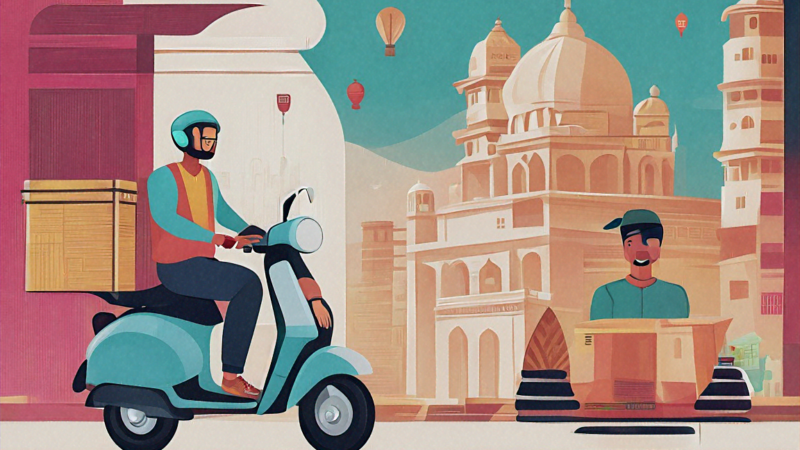
23.5 million. That’s the number NITI Aayog projects for India’s gig workforce by 2029-30. Sounds impressive when you drop it into a presentation. Sounds a lot less impressive when you talk to the delivery guy who biked through 42-degree heat in Delhi last summer to bring you a Rs 150 biryani, earned Rs 35 for the trip, and has no health insurance if he crashes on the way.
I’ve been watching the gig economy conversation in India with increasing skepticism, and I think it’s time someone said the uncomfortable part out loud: we’ve built an economy where millions of people work harder than most salaried employees for less money, less security, and fewer rights, and we’re calling it “opportunity” and “flexibility.” That framing deserves some serious questioning.
Don’t get me wrong — there’s real opportunity in India’s gig economy for certain types of workers. But the blanket optimism you see in most articles about this topic ignores a lot of messy reality. Let me try to be more honest about what’s actually going on.
What We Mean When We Say “Gig Economy”
First, a clarification that most people skip. “Gig economy” in India covers two wildly different realities that share almost nothing in common except the label.
There’s the platform-based gig economy: Swiggy delivery partners, Zomato riders, Ola and Uber drivers, Urban Company beauticians and plumbers, Dunzo delivery folks. These are people whose work is controlled by an app’s algorithm. They don’t set their own prices. They can’t negotiate terms. They accept jobs the app sends them or their ratings drop. Calling them “independent contractors” or “partners” is, I think, one of the more creative fictions of our time.
Then there’s the freelance or independent professional economy: software developers on Toptal and Upwork, graphic designers on Fiverr and 99designs, content writers on various platforms, management consultants who left their corporate jobs to work independently. These people actually have meaningful control over their work — they choose clients, set rates, and decide when and how to work.
Lumping these two groups together and calling them both “gig workers” is like lumping a junior doctor doing a 36-hour hospital shift and a dermatologist running their own clinic under the same category and calling them both “healthcare workers.” Technically true, practically meaningless.
The Platform Economy: Who’s Really Benefiting?
Let’s look at the platform-based side first, because that’s where most of India’s gig workers actually are.
Swiggy and Zomato together have roughly 5-6 lakh active delivery partners at any given time. Ola and Uber add another massive chunk. Urban Company, BigBasket, Blinkit, Zepto — the list keeps growing. These platforms have created income opportunities for millions of people who might otherwise be unemployed or underemployed. That’s real. A delivery partner earning Rs 15,000-25,000 a month in a tier-2 city where formal sector jobs are scarce — that matters to that person and their family. I don’t want to dismiss that.
But let’s look at the math more carefully. A Swiggy delivery partner in Bangalore might earn Rs 20,000-30,000 in a good month — gross earnings, before expenses. Subtract petrol (Rs 4,000-6,000), phone bills and data (Rs 500-700), vehicle maintenance (Rs 1,000-2,000), and the depreciation on their bike or scooter (which they own and maintain themselves). Net income drops to maybe Rs 12,000-20,000 for working 10-12 hours a day, six or seven days a week. That’s Rs 60-100 per hour of actual work. No PF, no ESI, no paid leave, no sick days.
Compare that to a similarly skilled worker in a formal sector job — say, a retail store employee or a small factory worker. They might earn Rs 12,000-18,000 per month, but they’ll have PF contributions, ESI medical coverage, paid holidays, some job security, and regulated working hours. The gig worker’s headline number looks similar or slightly higher, but the effective compensation (including benefits and security) is often lower.
And the platforms know this math. They’ve designed their business models around it. Low per-delivery payouts, algorithmic surge pricing that benefits the platform more than the worker, rating systems that create anxiety and compliance, and the constant threat of “deactivation” (being fired, but without calling it firing). I’m skeptical when these same platforms talk about “helping millions of micro-entrepreneurs.” The power dynamic isn’t that of an entrepreneur-customer relationship. It’s that of an employer-employee relationship, structured to avoid the legal obligations that come with employing people.
Urban Company: A Slightly Different Model
Urban Company deserves separate mention because their model works differently from pure delivery platforms, and the outcomes for workers seem genuinely better (though still imperfect).
An electrician or plumber on Urban Company can earn Rs 25,000-50,000 monthly. Beauticians, especially those doing premium services, report earning Rs 30,000-60,000 in good months. The platform handles customer acquisition, scheduling, payment processing, and quality control. Workers bring their skills and show up. The platform takes a commission (25-30%), but for many of these professionals, the volume of work they get through Urban Company far exceeds what they’d find on their own.
Urban Company has also introduced some worker-friendly policies — accident insurance, skill training programs, and (in some categories) minimum earning guarantees during initial months. It’s not perfect, and commission rates have been a source of tension (there were worker protests in 2022-23 over commission hikes), but the model works better for workers with specialized skills than the pure delivery economy.
What makes Urban Company work is that the workers have genuine skills that are hard to replace. You can train a new delivery partner in a day. Training a good electrician or beautician takes months or years. That skill moat gives workers more bargaining power, even within the platform structure. Seems like that skill element is what separates “gig work that can build into a career” from “gig work that’s a treadmill.”
Freelancing for Skilled Professionals: The Good Part
Now let me talk about the segment of the gig economy that I’m actually optimistic about: independent professionals with in-demand skills.
India has become a freelancing powerhouse. Indian freelancers are the second-largest group on Upwork (after the US) and the largest on Fiverr. Software developers, UI/UX designers, data analysts, content writers, video editors, digital marketers, virtual assistants — Indian professionals are serving clients worldwide from their bedrooms and co-working spaces.
A skilled web developer on Upwork can charge $30-80/hour for international clients. That’s Rs 2,500-6,600 per hour, which translates to Rs 4-10 lakhs per month if they’re working full-time. Even mid-level freelancers charge $15-30/hour and earn very comfortably by Indian standards. A friend of mine does content writing and SEO for US-based SaaS companies. She earns Rs 1.5-2 lakhs per month working about 30 hours a week from her apartment in Jaipur. No commute, no office politics, no cap on earnings. She started five years ago earning Rs 5,000 a month for blog posts. The growth curve in freelancing, once you build reputation and skills, can be remarkable.
Platforms like Toptal are even more selective — they claim to accept only the top 3% of applicants — but the pay reflects that. Toptal developers report earning $60-150/hour. For Indian professionals, this is life-changing money.
But — and there’s always a but — this kind of freelancing success requires strong skills, good English communication, self-discipline, and the ability to market yourself. It’s not for everyone. The dropout rate for new freelancers is staggering. Most people sign up on Upwork, underprice themselves, get terrible clients, earn peanuts for a few months, and quit. The ones who succeed treat freelancing like a business — they build portfolios, specialize in niches, invest in client relationships, and continuously upgrade their skills.
Social Security: The Elephant in the Room
Maybe the biggest systemic issue with India’s gig economy is the near-complete absence of social security for gig workers. And this isn’t just a feel-good concern — it’s a ticking time bomb.
When a Swiggy delivery partner crashes their bike (which happens more often than you’d think — two-wheelers in Indian city traffic are just plain dangerous), who pays the medical bills? When a freelance designer gets a serious illness and can’t work for three months, where does their income come from? When a gig worker turns 60 after decades of platform work, what’s their retirement plan?
The Social Security Code 2020 was supposed to address this. It included provisions for gig and platform workers — requiring the central government to frame schemes for life insurance, disability coverage, health benefits, and old-age protection. But implementation has been glacially slow. It’s 2026, and most gig workers still have zero formal social security. The e-Shram portal has registered over 290 million unorganized workers, which is great for data collection, but registration alone doesn’t provide benefits.
Some platforms have started their own initiatives. Zomato offers accident insurance for delivery partners. Uber has a driver welfare program. Urban Company provides some accident coverage. But these are voluntary, platform-dependent, and can be changed or withdrawn at any time. They’re better than nothing, but they’re not a substitute for a proper social security framework.
I think this is the single biggest challenge that will determine whether India’s gig economy becomes a genuine economic engine or a source of widespread precarity. A country can’t have 23.5 million workers with no safety net and pretend everything is fine. Something will have to give.
The Algorithm Problem
Here’s something that doesn’t get enough attention: algorithmic management and what it does to workers.
Platform workers don’t have a human boss. They have an algorithm. The algorithm decides which orders they get, how much they earn per delivery, whether they get bonuses or penalties, and ultimately whether they stay on the platform. And unlike a human manager, an algorithm is completely opaque and non-negotiable.
Delivery partners report that Swiggy and Zomato’s algorithms can be punishing. Reject too many orders (even if they’re unprofitable due to long distances)? Your priority drops. Low customer rating (even if the restaurant was slow, not you)? Fewer orders. Take a few days off? The algorithm seems to penalize you when you return. I’ve read accounts from delivery partners who describe feeling “controlled” by the app in ways that feel more restrictive than any traditional employer.
Uber drivers have documented similar experiences globally. The app uses “dynamic pricing” and “surge” to extract maximum revenue from riders, but the driver’s share of that surge is often disproportionately small. The opacity of how earnings are calculated means drivers can’t predict their income reliably. I’m probably not the only one who finds it strange that we’ve created a work arrangement where the worker has less predictability and control than a traditional employee, and we call it “independence.”
What Would Make Things Better?
I don’t think the gig economy is going away. And I don’t think that’s necessarily bad. Flexible work arrangements genuinely suit some people, and platform businesses have created real economic value. But the current setup is skewed too far in favor of platforms and against workers. A few things that could rebalance this:
Minimum earning guarantees for platform-based workers. Not minimum wage in the traditional sense, but a floor below which hourly earnings (after expenses) can’t fall. This exists in some form in a few cities globally and seems workable.
Mandatory social security contributions from platforms. If you have 5 lakh active workers and you’re a billion-dollar company, contributing to their health insurance and retirement isn’t an unreasonable ask. It would slightly reduce platform margins and slightly increase prices for consumers, but the trade-off seems fair.
Algorithmic transparency. Workers should be able to understand how their earnings are calculated, why they’re getting certain orders, and what factors affect their ratings. Black-box algorithmic management shouldn’t be legal in a democracy.
Portable benefits that follow the worker across platforms. If a delivery partner works for both Swiggy and Zomato, their social security benefits should accumulate in one place, not be tied to either platform. The e-Shram portal could theoretically enable this, but it needs to move from registration to actual benefit delivery.
Training and skill development programs that help platform workers move up the value chain. A delivery partner who learns basic accounting and customer management could become a small business owner. A domestic worker on a platform who gets trained in specialized cleaning or elderly care can charge premium rates. Upward mobility within the gig economy is possible but currently rare.
If You’re Considering Gig Work
Some practical advice for people thinking about entering the gig economy, based on what I’ve seen work and fail.
For skilled professionals: freelancing can be incredible, but treat it like a business from day one. Build a portfolio before you quit your job. Start taking freelance projects on the side while employed. Save 6-12 months of expenses as a runway. Specialize in something specific rather than being a generalist. And for the love of all that is good, don’t start by underpricing yourself just to get your first client. Low prices attract terrible clients who will drain your energy and damage your reputation.
For platform-based work: go in with clear expectations. It’s a physically demanding job with variable income and no security net. Build your own safety net — save aggressively during good months, get personal accident and health insurance, maintain your vehicle properly (breakdowns cost money and missed shifts). Diversify across platforms rather than depending on any single one. And keep looking for opportunities to build skills that can take you beyond platform work.
For everyone: keep meticulous financial records. Gig income is taxable, and the IT department is getting better at tracking platform payments. Set aside 10-15% of earnings for taxes if you’re above the basic exemption limit. Get a good accountant — the cost is worth it compared to the penalty for non-compliance.
One more thing worth mentioning: the tax angle. Most gig workers in India don’t realize their income is taxable, and the government is quietly getting better at tracking platform payments. If you earn above the basic exemption limit (Rs 3 lakh under the new regime), you owe taxes. Platforms like Swiggy and Uber are already reporting payment data to tax authorities. I’ve heard of delivery partners getting IT notices because they earned Rs 4-5 lakhs annually on a platform and didn’t file returns. Getting a basic CA consultation (many offer Rs 500-1,000 sessions for freelancers) early on can save a lot of headaches down the road.
Community and collective action are slowly emerging as factors too. Delivery worker unions, though still small and fragmented, have staged protests in multiple cities over commission cuts and working conditions. The Indian Federation of App-based Transport Workers (IFAT) is one example of organized advocacy that’s pushing for policy changes. Whether these movements gain enough momentum to shift the power balance remains to be seen, but the fact that they exist at all is significant.
So where does India’s gig economy go from here? Will it become a genuinely helping force that gives millions of Indians flexible, dignified work with adequate protections? Or will it become a massive informal workforce that generates extraordinary wealth for a handful of platforms while leaving workers perpetually insecure? I genuinely don’t know. And I’m not sure anyone does. But the answer probably depends on choices being made right now — by policymakers, by platforms, and by the workers themselves organizing to demand better. Which way do you think it’ll go?

Rajesh Kumar
Senior Career Counselor
Rajesh Kumar is a career counselor and job market analyst with over 8 years of experience helping job seekers across India find meaningful employment. He specializes in government job preparation, interview strategies, and career guidance for freshers and experienced professionals alike.



Comments
Be the first to leave a comment on this article.