
How Artificial Intelligence Is Changing the Job Market

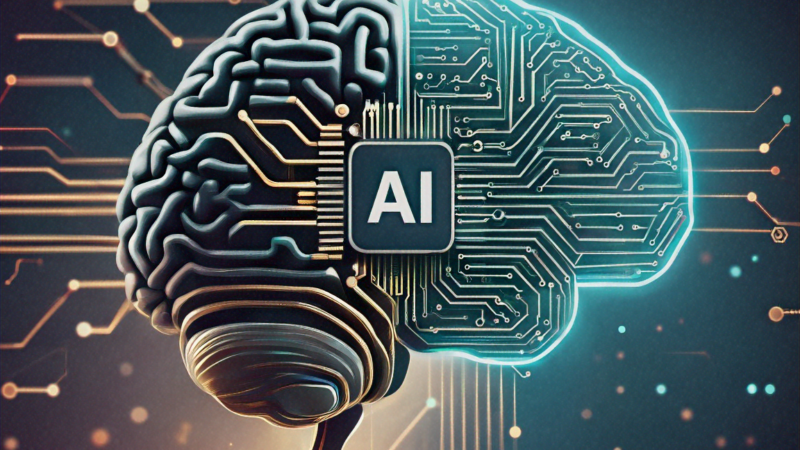
I’m going to push back on something that’s become almost gospel in career advice circles: the idea that AI is going to create more jobs than it destroys. People keep saying this like it’s settled fact, but I don’t think we actually know that yet, and I’m a little tired of the forced optimism.
Don’t get me wrong — AI is definitely creating new roles. That part is true. But the way people talk about it, you’d think every data entry operator who gets replaced by automation is going to smoothly transition into becoming a prompt engineer. That’s not how labor markets work, and pretending otherwise does a disservice to the millions of workers who are genuinely anxious about what’s coming.
Let’s actually look at what’s happening in India’s job market right now, with AI running through it like water through a cracked dam, and try to figure out what we can reasonably expect.
The “AI Won’t Take Your Job” Narrative Needs Scrutiny
You’ve probably heard the comforting line: “AI won’t replace you, someone who uses AI will.” It’s catchy. It fits on a LinkedIn post. But is it accurate?
Partially. For knowledge workers who can adapt — software developers, marketers, analysts, designers — yeah, AI is becoming a tool that makes them more productive. A developer using GitHub Copilot or Cursor can write code faster. A marketer using ChatGPT can draft campaigns quicker. These people aren’t being replaced; they’re being augmented.
But what about the person whose entire job was writing first drafts of marketing copy? Or the junior developer whose role was basically translating specifications into boilerplate code? Or the BPO worker in Noida who processed insurance claims by following a decision tree? For these roles, AI doesn’t augment — it substitutes. And I think it’s dishonest to pretend that transition is painless.
A report from NASSCOM estimated that around 30 percent of current IT services roles in India could be significantly impacted by AI automation by 2027. TCS, Infosys, and Wipro have all publicly talked about retraining “lakhs” of employees, which sounds positive until you realize the reason they need retraining is that their current skills are becoming obsolete. The retraining itself is a race against time.
What’s Actually Getting Automated?
Let’s get specific instead of speaking in generalities.
Data entry and basic processing. This is the most obvious one. Any job that involves taking information from one format and putting it into another format is at severe risk. Bank back-office operations, insurance claim processing, basic accounting reconciliation — AI tools can now handle these with higher accuracy and zero breaks. India has millions of people in these roles.
Customer service (tier 1). Chatbots powered by large language models have gotten genuinely good. Not perfect, but good enough to handle 60 to 70 percent of incoming queries without human intervention. Companies like HDFC Bank, Airtel, and Flipkart have already deployed AI chatbots that handle a majority of customer interactions. The human agents who remain are handling the complicated, emotionally charged cases — which is arguably better work, but there are fewer seats at the table.
Basic code generation. Junior developer tasks — building CRUD applications, writing unit tests, converting designs to frontend code — can now be done partially or fully by AI coding assistants. This doesn’t mean junior developers vanish overnight, but it probably means companies hire fewer of them, or expect each one to be productive much sooner.
Content creation at scale. Blog posts, product descriptions, social media captions, email templates — AI can generate all of this at a quality level that’s good enough for many business purposes. Content mills that relied on cheap human writers are already feeling the squeeze. I know freelance writers in India who’ve seen their rates drop by 30 to 40 percent over the past year because clients know AI is an alternative.
Translation and transcription. These were significant employer categories in India, especially for English-to-regional-language work. AI translation has improved dramatically, and while it’s not flawless, it’s good enough for many commercial uses.
New Jobs That Didn’t Exist Three Years Ago
Alright, now the other side of the coin. AI has genuinely created new job categories. Some of them are well-paid and interesting. The question is whether they exist in sufficient numbers to absorb displaced workers. I’m skeptical, but let me lay out what’s out there.
AI/ML Engineers. India is estimated to need around 1 million AI engineers by 2027, according to various industry reports. These are people who design, build, and maintain AI systems — model training, data pipeline architecture, deployment and monitoring. The pay is excellent: 15 to 50 LPA depending on experience, sometimes more at top-tier companies. But the skills barrier is high. You need strong mathematics, programming ability, and domain knowledge. It’s not a role you can pivot into over a weekend.
Prompt Engineers. This one is interesting because it barely existed two years ago. Prompt engineering involves crafting effective instructions for large language models to get desired outputs. Companies are hiring for this, and some are paying surprisingly well — 8 to 20 LPA at mid-level. But I’m genuinely uncertain whether this remains a standalone role long-term or becomes a skill that everyone’s expected to have, like knowing how to use Excel. Probably the latter, honestly.
AI Ethics and Safety Specialists. As AI systems make more decisions that affect people’s lives — credit scoring, hiring, medical diagnosis — there’s growing demand for people who can evaluate these systems for bias, fairness, and safety. Companies like Google, Microsoft, and even some Indian startups are building dedicated ethics teams. The numbers are small but growing.
Data Annotation Specialists. AI models need massive amounts of labeled training data. India has become a global hub for data annotation, with companies like Scale AI, Labelbox, and multiple Indian firms employing thousands of people to tag images, classify text, and label audio. The pay isn’t great — often 15,000 to 30,000 per month for entry-level work — but it’s providing employment at scale. Some people view this as a new form of digital labor that doesn’t actually give workers transferable skills. That concern isn’t unreasonable.
AI Product Managers. Bridging the gap between what AI can do technically and what the business actually needs. These roles require understanding both the technology and the market, and they’re in extremely high demand. From what I’ve seen, people with a combination of product management experience and AI literacy are fielding multiple job offers.
How India’s IT Industry Is Handling This
The big IT services companies — TCS, Infosys, Wipro, HCL, Tech Mahindra — are in an interesting bind. Their traditional business model was built on labor arbitrage: hire large numbers of Indian engineers at lower costs than Western countries and deliver projects at scale. AI threatens to shrink the headcount advantage that made this model work.
To their credit, most of these companies have been investing heavily in AI retraining. TCS has been running internal AI upskilling programs since 2023, and claims to have trained over 300,000 employees in AI-related skills. Infosys has its own AI platforms and training programs. Wipro has partnered with external providers for AI education.
But here’s what I wonder. Training 300,000 people to use AI tools is not the same as training 300,000 people to build AI systems. The first is achievable and useful. The second requires a level of mathematical and computational aptitude that not everyone has. And it’s the second category — the builders, not just the users — who are truly safe from AI displacement.
Smaller IT companies and startups are adapting faster, probably because they don’t have legacy structures to protect. They’re hiring AI-native teams and building products around AI from day one. Some of the most interesting AI work in India is happening at companies you’ve never heard of — 50-person startups in Bangalore, Hyderabad, and even Tier 2 cities that are building AI products for global markets.
The Industries Getting Reshaped
Healthcare. Indian startups like Niramai (AI-powered breast cancer detection), SigTuple (blood testing automation), and Qure.ai (radiology AI) are doing genuinely important work. AI-powered diagnostics could help address India’s massive shortage of specialist doctors, especially in rural areas. New roles are emerging at the intersection of healthcare and technology — people who understand both medical practice and machine learning. Demand for these hybrid professionals far exceeds supply right now.
Banking and Finance. Maybe the sector most aggressively adopting AI. Fraud detection algorithms at companies like HDFC, SBI, and ICICI are catching suspicious transactions in milliseconds. Credit scoring models are using alternative data sources — mobile usage patterns, UPI transaction history — to extend credit to people who’ve never had formal credit histories. The fintech sector alone has probably created over 50,000 AI-related jobs in the past two years. But traditional bank teller and back-office roles are shrinking at roughly the same rate.
Agriculture. This one doesn’t get enough attention. AI-powered crop advisory apps, drone-based crop monitoring, and predictive analytics for weather and market prices are starting to transform Indian farming. Companies like CropIn, DeHaat, and Fasal are building AI tools that directly reach farmers. The employment impact here is mostly positive — these tools are creating new tech-enabled rural jobs rather than displacing farm labor.
Legal services. AI contract review, legal research automation, and even AI-drafted agreements are becoming common at top Indian law firms. Junior lawyers who used to spend hours reviewing contracts now supervise AI that does it in minutes. Some firms are hiring fewer associates as a result, while others are redeploying them to higher-value advisory work.
Education. AI tutoring platforms are booming in India. Companies like Byju’s (whatever’s left of it), Physics Wallah, and Embibe are using AI to personalize learning at scale. This creates new jobs in educational AI development but probably threatens traditional tutoring at the lower end of the market.
Retail and E-commerce. Flipkart, Amazon India, and Reliance’s JioMart are using AI for demand forecasting, inventory management, personalized recommendations, and dynamic pricing. Warehouse operations are getting increasingly automated. The logistics optimization alone — figuring out the fastest, cheapest route for millions of daily deliveries — is a massive AI application. Jobs are being created on the AI development and management side while being reduced on the manual sorting and basic logistics planning side.
Manufacturing. Predictive maintenance using IoT sensors and AI analysis is becoming standard in large Indian manufacturing plants. Tata Steel, Mahindra, and several auto manufacturers are deploying AI for quality control, supply chain optimization, and production scheduling. Factory floor jobs are changing — fewer people doing repetitive tasks, more people monitoring and managing AI-driven systems. Whether that’s a net gain or loss in employment probably depends on the specific factory and how aggressive their automation timeline is.
What Should You Actually Do About All This?
I’m going to avoid the typical “learn AI or die” advice because it’s reductive. Not everyone needs to become an AI engineer. But here’s what seems genuinely useful based on what’s playing out.
Learn to use AI tools in your specific domain. Whatever you do — marketing, accounting, design, project management — there are AI tools becoming standard in your field. Learn them. Don’t just dabble. Get genuinely proficient. The gap between “I’ve used ChatGPT” and “I can set up automated AI workflows that save my team 20 hours a week” is the gap between dispensable and indispensable.
Develop skills AI is bad at. Anything involving complex human judgment, emotional intelligence, creative problem-solving, building relationships, managing ambiguity, or leadership is hard for AI to replicate. A good manager, a persuasive salesperson, a creative director who can see around corners — these roles are probably the safest in an AI-heavy world. Investing in these “soft” skills might be more protective than learning Python, depending on your career path.
Stay close to the money. If you’re choosing where to focus, look at which AI applications generate the most business value. Right now, that’s probably AI in healthcare diagnostics, financial risk modeling, enterprise automation, and AI-powered product development. Fields where AI creates measurable ROI tend to be fields where humans who can implement and manage that AI get paid well.
Don’t ignore the basics. In the rush to learn AI, I see people skipping over foundational skills. If you’re a developer, understanding data structures and algorithms still matters. If you’re in business, understanding financial statements still matters. AI amplifies capability — but you need capability to amplify.
Watch what companies actually do, not what they say. Every company claims to be “AI-first” in their press releases. That means nothing. Look at their actual job postings. Look at which roles they’re hiring for and which they’re freezing. If a company is hiring AI engineers and reducing their customer support headcount, that tells you exactly where they think the future is going, regardless of their public messaging about “AI augmenting human potential.” Following the hiring patterns gives you a more accurate read on industry direction than following the thought leadership posts.
Build a portfolio that shows AI integration. If you’re job searching, demonstrating that you can work with AI tools is becoming a differentiator. Include projects where you used AI assistants, built AI-enhanced workflows, or applied machine learning to solve a real problem. The job listings mentioning AI skills as a requirement have reportedly gone up by 300 percent on major platforms, and that number’s not shrinking.
The Big Uncertainty Nobody Wants to Admit
Here’s what I keep coming back to. All the predictions about AI and jobs — including the ones in this article — are based on extrapolating from what AI can do today and what it seems likely to do soon. But AI capabilities have been advancing faster than most experts predicted. GPT-4 was more capable than most people expected. The next generation of models will probably surprise us again.
What if AI gets good enough to handle complex customer interactions, not just simple ones? What if AI coding assistants advance to the point where a single developer can do the work that currently requires five? What if AI-generated creative content becomes indistinguishable from human-created content?
I don’t know the answers. Nobody does. And I think that honesty is more useful than false confidence in either direction. The people telling you “AI will destroy all jobs” are probably wrong. The people telling you “AI will create a utopia of high-skilled work for everyone” are also probably wrong. What’ll actually happen is probably somewhere in the messy middle, with winners and losers, with some industries transformed and others barely touched, with massive opportunities for some people and genuine hardship for others.
The best any of us can do is stay informed, stay adaptable, and be honest about what we’re seeing. Keep learning. Keep watching where the market is actually moving, not where pundits say it should move. Pay attention to what’s happening in your specific industry, in your specific role, at companies you’d actually want to work for.
And maybe ask yourself a question that doesn’t have a comfortable answer: if the AI tools available today can already do 40 percent of what you do, what are you doing to make sure the other 60 percent is worth paying a human for?

Rajesh Kumar
Senior Career Counselor
Rajesh Kumar is a career counselor and job market analyst with over 8 years of experience helping job seekers across India find meaningful employment. He specializes in government job preparation, interview strategies, and career guidance for freshers and experienced professionals alike.


Comments
Be the first to leave a comment on this article.