
How to Become a Project Manager: Skills and Certifications

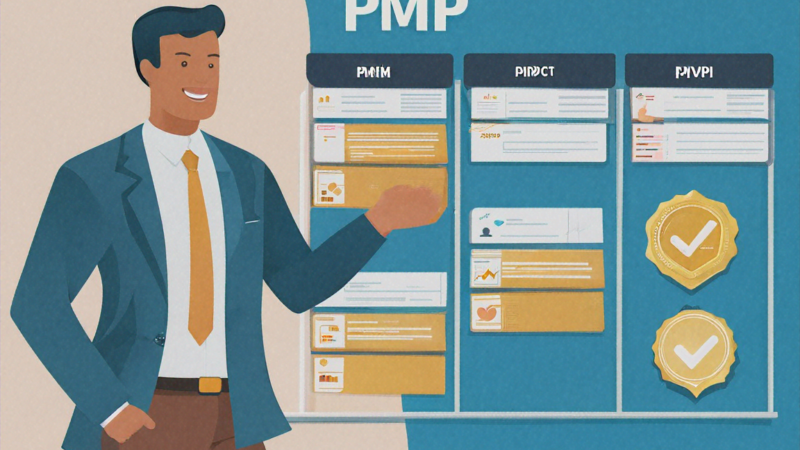
I disagree with most career advice about project management. The standard line goes something like this: “Get a PMP certification, learn Agile, develop leadership skills, and you’re set.” As if slapping a certification on your LinkedIn profile transforms you into someone who can actually manage a project.
I’ve worked with project managers who had every certification under the sun and couldn’t run a meeting effectively. I’ve also worked with PMs who had zero formal credentials and somehow kept million-dollar projects on track through sheer competence and people skills. The truth about becoming a good project manager is messier and more interesting than any certification roadmap will tell you.
That said, certifications do matter in India. They open doors. They get you past HR filters. They bump up your salary by a measurable percentage. So I’m not going to tell you to skip them. I’m going to give you the fuller picture that most guides leave out.
What the Job Actually Looks Like
A project manager plans, executes, and delivers projects within some set of constraints, usually scope, time, and money. That’s the textbook definition. Here’s what the job actually feels like day to day.
You’re in meetings. A lot of meetings. Status updates with the team, requirement discussions with stakeholders, escalation calls with leadership, sprint ceremonies with developers, vendor negotiations, risk review sessions. On a busy week, I’d estimate 60-70% of a PM’s time goes to meetings and communication. The rest goes to planning, documentation, tracking, and putting out fires.
The “putting out fires” part is what nobody mentions in the job description. A key developer quits two weeks before a release. A client changes requirements mid-sprint. A vendor misses a delivery date. A production server goes down at 11 PM on a Friday. These aren’t exceptions. These are Tuesday. And how you handle them, staying calm, finding solutions, communicating clearly while everything is going sideways, that’s what separates good project managers from mediocre ones.
In India’s IT industry specifically, PMs typically handle software development projects, digital transformation work, cloud migration programs, and product launches for either Indian companies or international clients. A lot of Indian PMs work on offshore delivery for US and European companies, which adds time zone management and cross-cultural communication to the mix.
Skills That Actually Matter (Not Just the Resume Ones)
Every guide lists the same skills: leadership, communication, planning, risk management. They’re not wrong. They’re just incomplete.
Communication, but specifically the hard kind. Telling a client their project is on track is easy. Telling a client their project is delayed by three weeks because of a scope creep they caused is hard. Giving a team member honest feedback about their underperformance is hard. Telling senior management that a deadline is unrealistic and here’s why is hard. Project management is about having difficult conversations clearly and without creating enemies. I think this is the single most important skill, and it takes years to develop.
Planning that survives contact with reality. Anyone can create a Gantt chart. The skill is knowing that your beautiful plan will fall apart within two weeks and building enough flexibility to absorb the inevitable surprises. Work Breakdown Structures (WBS) are useful. Buffer time on critical path tasks is useful. Having a Plan B for your top three risks is useful. But the real skill is replanning quickly when things change, without panicking and without losing the team’s confidence.
Risk management that’s actually practical. I’ve seen PMs create elaborate risk registers with probability scores and impact matrices for risks that will clearly never happen. And then miss the obvious risk sitting right in front of them, like their lead developer interviewing at another company. Good risk management is about paying attention, asking “what could go wrong here?” constantly, and preparing mitigation plans for the things most likely to actually go wrong.
Budget awareness. Many PMs in India, especially in IT, don’t manage budgets directly. The project accounting sits with delivery managers or finance teams. But understanding the financial side of your project, burn rates, margin targets, resource cost variations, makes you much more effective. It also sets you up for senior roles where budget ownership is mandatory.
Agile fluency. Most Indian IT companies have adopted Agile in some form. Some do it well. Many do what I call “Scrumfall,” which is basically waterfall with daily standups bolted on. Understanding Scrum, Kanban, SAFe, and when to use each one matters. Understanding that Agile is a mindset about iterative delivery and responding to change, not just a set of ceremonies you follow mechanically, matters even more.
Technical literacy. You don’t need to code. But you need to understand what your team is working on well enough to ask good questions, spot red flags, and earn respect. A PM who doesn’t understand what an API is, or what a database migration involves, or why a particular architectural decision is risky, will struggle to make good project decisions. You don’t need to be a developer. But you need to speak the language.
Stakeholder management. This is a polite way of saying “managing people who have conflicting priorities and all think their priority is the most important one.” Clients want more features. Leadership wants faster delivery. The team wants less pressure. Your job is to find a balance that keeps the project moving without anyone feeling ignored. It’s political, it’s exhausting, and it’s one of the most valuable things a PM does.
The Certification space
Alright, let’s talk certifications. They matter in the Indian job market, especially at larger companies and MNCs where HR teams use them as screening criteria.
PMP (Project Management Professional). This is the gold standard from PMI (Project Management Institute). Getting it requires 36 months of project management experience if you have a bachelor’s degree, plus 35 hours of PM education (which you can get through online courses or workshops). The exam covers predictive (waterfall), Agile, and hybrid approaches. It’s not easy. The pass rate is probably around 60-70%, and most people study for two to three months. But the payoff is real. PMP-certified professionals in India earn 20-25% more than their non-certified peers, from what I’ve seen in salary surveys and personal observation. This gap varies by company and role, but the premium is consistent enough that the investment (around 30,000-40,000 rupees for the exam plus study materials) pays for itself within months.
CAPM (Certified Associate in Project Management). PMI’s entry-level cert. Requires 23 hours of PM education but no prior PM experience, which makes it perfect for people transitioning into project management from technical or functional roles. It’s less recognized than PMP but still carries weight, especially on a resume that has limited PM experience. Think of it as a stepping stone.
CSM (Certified ScrumMaster). From Scrum Alliance. Requires a two-day training course and a pretty straightforward online exam. The training typically costs 15,000-30,000 rupees. CSM is the most common Agile certification in India and is practically expected for PM roles in Agile-practicing companies. The training itself is valuable because good CSM trainers teach you how Scrum actually works in practice, not just theory.
PMI-ACP (Agile Certified Practitioner). PMI’s Agile certification. Requires broader Agile knowledge than CSM, covering Scrum, Kanban, Lean, XP, and other frameworks. The experience requirements are heavier: 2,000 hours of general project experience and 1,500 hours specifically on Agile projects. This cert positions you as someone who understands Agile deeply, not just Scrum specifically.
PRINCE2. More popular in UK and European companies. Some Indian MNCs with European clients value it. It has Foundation and Practitioner levels. If you’re working with British or European clients, having PRINCE2 on your resume opens doors that PMP alone might not.
SAFe Agilist. For managing large-scale Agile programs across multiple teams. SAFe (Scaled Agile Framework) has gained significant traction in large Indian IT companies like TCS, Infosys, Wipro, and HCL, where single projects often involve 50-200 people across multiple scrum teams. If you’re in or heading toward program management at a large company, SAFe certification is increasingly expected.
Career Path and Real Salary Numbers
The typical progression looks something like this, though timelines vary.
Associate or Junior PM: 5-8 LPA (0-3 years). You might come in as a project coordinator, scrum master, or junior PM. You’re learning the basics, running smaller workstreams, and working under a senior PM. The pay isn’t spectacular, but the learning curve is steep.
Project Manager: 12-20 LPA (3-7 years). You’re running projects independently. You own the delivery. You interface with clients and stakeholders directly. This is where most PMs spend the longest, and it’s where the PMP certification starts making a measurable difference in compensation.
Senior Project Manager: 20-35 LPA (7-12 years). You’re handling larger, more complex projects or managing multiple projects simultaneously. You’re probably mentoring junior PMs. You might be leading a small PMO (Project Management Office). At this level, the distinction between project manager and program manager starts blurring.
Program Manager or PMO Head: 35-60 LPA (12+ years). You’re managing portfolios of projects, setting delivery standards, and working with executive leadership. Budget responsibility is significant. Organizational influence is significant. At this level, your impact goes beyond individual projects to shaping how the entire organization delivers work.
VP of Delivery or CTO track: 60+ LPA (15+ years). Some PMs eventually move into executive roles overseeing entire delivery organizations. This path typically requires both deep PM expertise and strong business acumen. Not everyone reaches this level, and not everyone wants to, because the role becomes much more about strategy and politics than hands-on project management.
Making the Transition from Technical Roles
Most project managers in India didn’t start as project managers. They transitioned from development, testing, business analysis, or functional roles. If that’s your situation, here’s what’s worked for people I know.
Start taking on coordination responsibilities within your current team. Volunteer to run sprint planning. Own the status reports. Manage the communication with the onshore team. Be the person who tracks risks and escalates issues. These aren’t glamorous tasks, but they give you PM experience that you can talk about in interviews and on certification applications.
Talk to your manager about your interest in PM roles. Most companies have internal transfer processes, and moving into a PM role within your current company is usually easier than landing one at a new company, because your current employer already knows your work ethic and capabilities.
Get your first certification. CAPM if you have no PM experience, CSM if your team does Agile. These certifications signal to employers and to your own organization that you’re serious about the transition.
Join a PMI chapter. India has active chapters in Bangalore, Mumbai, Delhi-NCR, Hyderabad, Chennai, and Pune. They host networking events, workshops, and mentoring programs. I attended a PMI Bangalore event a couple of years ago and ended up connecting with a program manager at an MNC who later referred me for a position. Those connections are worth more than any online course.
Build a portfolio of sorts. PMs don’t have GitHub profiles or design portfolios in the traditional sense, but you can document your project experience in a structured way. A one-page summary for each project you’ve managed, covering the scope, team size, challenges, your approach, and results, gives you concrete material for interviews. Keep these updated. When someone asks “Tell me about a time you managed a difficult stakeholder,” you want to pull from a library of real stories, not scramble to remember something on the spot.
One more thing about transitioning: don’t expect an instant salary bump. In fact, many people take a lateral move or even a slight pay cut when switching from a senior technical role to a junior PM role. The investment pays off within two to three years as your PM salary trajectory tends to be steeper than the technical track, especially once you’re certified and have a few successful projects under your belt. But that initial transition period requires patience and sometimes a short-term financial sacrifice.
Tools of the Trade
You’ll use a lot of tools as a PM, and different companies have different stacks. But some are common enough that knowing them will help in interviews and on the job.
Jira is the most widely used project management tool in Indian IT companies. Learning Jira, understanding how to create and manage epics, stories, sprints, and boards, is almost mandatory. If you’ve never used it, sign up for a free Jira Cloud account and set up a sample project. Play with it for a week. Most PM interviews for tech companies will assume you know Jira.
Confluence or Notion for documentation. PMs write a lot. Status reports, meeting notes, requirement documents, risk registers, decision logs. Having a tool where all of this lives in an organized way is part of the job. Both Confluence (Atlassian) and Notion are popular, and learning either one transfers to the other.
Microsoft Project or Smartsheet for detailed project planning, especially in non-Agile environments. Gantt charts, resource allocation, dependency tracking, these tools handle the planning side of things. Not every company uses them, but understanding the concepts they represent is important regardless of the specific tool.
Slack or Microsoft Teams for communication. Pretty straightforward, but knowing how to manage channels, integrate with other tools, and use these platforms for async communication is a real skill. Good PMs structure their team’s communication channels thoughtfully rather than letting everything devolve into one chaotic general channel.
Miro or FigJam for collaborative whiteboarding. Sprint retrospectives, brainstorming sessions, process mapping, stakeholder mapping, these visual collaboration tools have become standard, especially with distributed teams. Knowing how to run a good Miro session is a surprisingly useful PM skill.
The Common Misconception About Agile
I need to say this because I see it all the time. Agile is not the absence of planning. Too many people, including some PMs, interpret Agile as “we don’t need a plan, we’ll just figure it out as we go.” That’s not Agile. That’s chaos.
Agile means you plan iteratively. You have a product roadmap, you break it into releases, you break releases into sprints, and you plan each sprint in detail. The difference from waterfall is that you accept the plan will change based on what you learn, and you build that adaptability into your process. But there’s always a plan. It just evolves.
Understanding this distinction matters because many Indian companies claim to be Agile but are actually just doing waterfall with more frequent meetings. As a PM, you need to know what genuine Agile practice looks like so you can identify when a team is going through the motions versus actually embracing iterative delivery. And sometimes you’ll be the person who has to gently push a team from fake Agile toward real Agile, which requires both knowledge and diplomacy.
What I Keep Coming Back To
I want to end with something that happened to me early in my career. I was on a project that was falling apart. Timeline blown, budget overrun, client furious, team demoralized. The senior PM assigned to rescue the project walked in, spent two days just listening, talked to every team member and stakeholder individually, and then in a one-hour meeting somehow reframed the entire situation in a way that gave everyone a clear path forward. No fancy frameworks. No methodology jargon. Just clarity, calm, and the ability to make people feel like things were going to be okay.
I’ve thought about that moment many times since. Because that’s what great project management actually looks like. Not the certifications, not the tools, not the methodologies. It’s the human stuff. Reading a room. Building trust. Staying steady when everything around you is chaotic. The rest you can learn. That part, I think, you have to practice until it becomes instinct. And maybe that’s the most honest thing I can say about this career: the skills that matter most are the ones that are hardest to certify.

Rajesh Kumar
Senior Career Counselor
Rajesh Kumar is a career counselor and job market analyst with over 8 years of experience helping job seekers across India find meaningful employment. He specializes in government job preparation, interview strategies, and career guidance for freshers and experienced professionals alike.

Comments
Be the first to leave a comment on this article.