
MBA Jobs and Salary Guide 2026

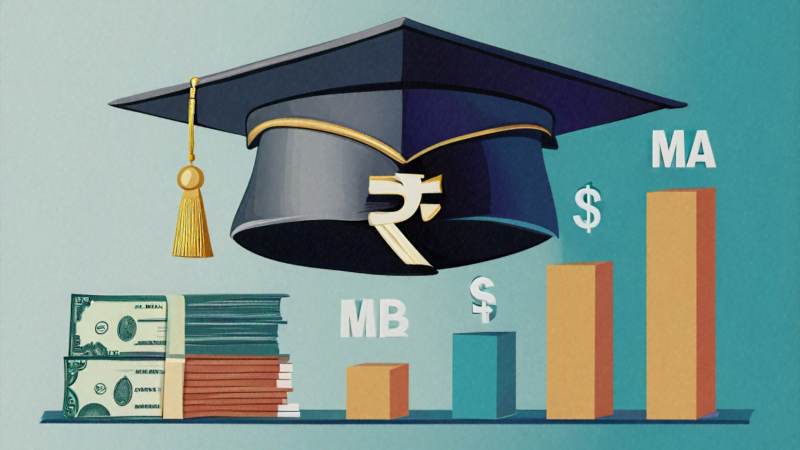
Most MBA degrees in India aren’t worth the money. There, I said it. Before the comment section explodes, let me clarify: an MBA from a top 20-25 B-school? Absolutely worth it. Life-changing, career-accelerating, doors-flying-open kind of worth it. An MBA from a random private college that you’ve never heard of, charging Rs 10-15 lakhs with promises of “100% placement”? That’s probably a bad investment, and I think a lot of people need to hear that before they sign the loan papers.
The ROI on an MBA in India is wildly bimodal. At one end, IIM Ahmedabad graduates get median packages of Rs 32-35 LPA. At the other end, graduates from unranked colleges struggle to find jobs paying Rs 5-6 LPA — which they could’ve gotten without spending two years and Rs 12 lakhs. The MBA isn’t the differentiator. The school is the differentiator. And if you’re going to invest two years of your life and a significant amount of money, you should go in with clear-eyed expectations about what you’ll get on the other side.
The B-School Tier System (How India Really Works)
Nobody in the MBA world likes to admit this openly, but there’s a pretty rigid caste system among B-schools in India, and employers absolutely sort candidates based on it.
Tier 1: The old IIMs (Ahmedabad, Bangalore, Calcutta), ISB Hyderabad, XLRI, FMS Delhi, IIM Lucknow, IIM Kozhikode, IIM Indore, MDI Gurgaon, SPJIMR Mumbai. Graduates from these schools get access to the best recruiters — McKinsey, BCG, Bain, Goldman Sachs, HUL, P&G, Google, Amazon. Median placements range from Rs 18-35 LPA depending on the specific school. The alumni network alone is worth the tuition.
Tier 2: Newer IIMs (Trichy, Raipur, Ranchi, Rohtak, Kashipur, etc.), NMIMS Mumbai, SIBM Pune, Great Lakes, TAPMI, IMT Ghaziabad. Good schools with decent placements — median Rs 10-18 LPA. You’ll get solid corporate jobs, but the premium consulting and banking roles are harder to access. These schools are worth it if you’re getting significant scholarship funding or if your pre-MBA salary was below Rs 6-7 LPA.
Tier 3: Everything else. And look, there are some fine institutions in this tier. But the placement data from most of these schools, when you dig past the marketing-speak (“highest CTC of Rs 28 LPA!” — yeah, one student, probably with pre-existing connections), is sobering. Median placements of Rs 5-8 LPA for a degree that cost Rs 10-15 lakhs. I’m not saying don’t go — I’m saying do the math first.
A CAT score of 95+ percentile generally gets you into Tier 1 schools. 85-95 percentile puts you in range for Tier 2. Below 85, your options narrow significantly unless you have exceptional work experience or a strong profile otherwise.
MBA Specializations: What Actually Pays
Choosing your specialization matters more than most incoming MBA students realize. The salary gap between specializations can be 30-50% at the same school. Let me break down the major ones with honest salary ranges for 2026.
Finance
Finance MBAs have the widest salary range of any specialization. That’s because “finance” covers everything from a bank relationship manager earning Rs 8 LPA to an investment banker pulling Rs 40+ LPA. Same degree, same specialization, wildly different outcomes based on which specific finance role you land.
From a top IIM, finance graduates entering investment banking or management consulting get Rs 20-35 LPA. Those going into corporate finance roles at large companies get Rs 15-22 LPA. Private banking (relationship management for HNI clients at banks like HDFC, Kotak, IIFL) pays Rs 10-18 LPA. Insurance and asset management Rs 10-15 LPA. From Tier 2 schools, subtract 30-40% from these numbers.
Finance is probably the specialization where the school brand matters most. A finance MBA from IIM A vs. a finance MBA from a Tier 3 school — the salary gap is 3-5x. If you’re targeting finance, fight hard for the best school you can get into.
Marketing
Marketing used to be seen as the “fun” MBA specialization. More creative, less Excel-heavy than finance. That’s still somewhat true, but marketing roles have gotten increasingly analytical. Brand managers at HUL or P&G spend as much time looking at data dashboards as they do brainstorming campaign ideas.
From top schools, marketing roles at FMCG companies (HUL, P&G, Nestle, ITC) pay Rs 16-22 LPA. Digital marketing roles at tech companies pay Rs 14-20 LPA. Advertising and media planning agencies pay less — Rs 8-14 LPA — but some people genuinely love that work and the creative exposure is unmatched. E-commerce marketing at Amazon, Flipkart, Myntra pays Rs 15-22 LPA with good growth potential.
From Tier 2 schools, FMCG marketing becomes harder to break into (these companies are very school-pedigree conscious), but digital marketing and startup marketing roles remain accessible at Rs 8-14 LPA.
Operations and Supply Chain
Quietly one of the best specializations in terms of job security and steady salary growth. Not glamorous, doesn’t get LinkedIn attention, but operations managers are in constant demand.
Manufacturing companies, FMCG, automotive, retail — they all need operations people. Starting salaries from top schools: Rs 14-20 LPA. From Tier 2 schools: Rs 8-14 LPA. Growth is steady — operations managers who reach VP/Director level after 10-15 years comfortably earn Rs 35-60 LPA.
Supply chain management has gotten a boost from e-commerce growth. Amazon, Flipkart, and Reliance Retail are hiring aggressively for supply chain roles. If you like solving logistics puzzles and don’t need your job title to sound impressive at parties, operations is a great bet.
Human Resources
HR is the specialization that gets the least respect and arguably deserves more. Starting salaries are the lowest among major specializations — Rs 8-14 LPA from top schools, Rs 5-10 LPA from Tier 2. But HR professionals who reach CHRO level (Chief Human Resources Officer) at large companies earn Rs 50 LPA to Rs 1 crore+. The path is longer, but the ceiling isn’t as low as people think.
HR has also evolved significantly. People analytics, organizational design, employer branding, DEI (Diversity, Equity, Inclusion) — these are strategic functions now, not just “hire people and manage payroll.” If you’re genuinely interested in human behavior and organizational dynamics, HR can be deeply fulfilling work. Just don’t go into it expecting investment banker salaries in your first five years.
IT and Systems Management
This specialization has gotten interesting in the AI era. Companies need people who understand both technology and business — who can translate between engineers and executives. Product management roles, which barely existed as a formal discipline ten years ago, now pay Rs 18-30 LPA from top schools and Rs 12-20 LPA from Tier 2 schools.
Tech consulting (Accenture Strategy, Deloitte Digital, EY-Parthenon tech practice) actively recruits MBA grads with IT specialization for Rs 18-28 LPA from top schools. These roles involve advising companies on digital transformation, AI adoption, cloud migration — stuff that’s genuinely shaping industries right now.
Who’s Actually Hiring MBA Graduates in 2026
The recruiter mix has shifted. Traditional MBA employers are still around, but some new players have emerged while others have pulled back.
Consulting firms remain the top recruiters at elite B-schools. McKinsey, BCG, and Bain (the “MBB” trifecta) pay Rs 28-40 LPA for fresh MBA hires from IIM A/B/C and ISB. Tier 2 consulting firms — Kearney, Oliver Wyman, Strategy&, Accenture Strategy — pay Rs 20-30 LPA. These roles are intensely competitive. McKinsey might hire 5-8 people from each top IIM per year, and 200 students are applying.
FMCG companies (HUL, P&G, Nestle, Marico, ITC) are the traditional marketing and operations recruiters. HUL is famously the most sought-after FMCG employer, with starting packages of Rs 16-18 LPA and a management trainee program that’s considered one of the best in India. Getting into HUL from campus is extremely competitive — they take maybe 10-15 people per IIM.
Banks and financial institutions: HDFC Bank, ICICI Bank, Goldman Sachs, JPMorgan, Citi, Kotak Mahindra, Aditya Birla Capital. Finance roles range from corporate banking (Rs 12-18 LPA) to investment banking (Rs 20-40 LPA). Goldman Sachs and JPMorgan recruit primarily from IIM A/B/C and ISB for their India offices.
Tech companies have become major MBA recruiters. Amazon hires 50-100 MBA graduates per year across operations, product, and marketing roles at Rs 20-30 LPA. Google’s MBA hiring is smaller but pays Rs 25-35 LPA. Microsoft, Flipkart, Swiggy, Meesho, Razorpay, CRED — the tech and startup ecosystem now competes aggressively with consulting and banking for top MBA talent.
General management and conglomerate roles at Tata Group (TAS program), Aditya Birla Group, Mahindra Group, and Reliance Industries offer broad exposure and Rs 15-25 LPA starting packages. These leadership rotational programs are excellent for people who aren’t sure which function they want to specialize in.
The CAT and Beyond: Getting In
Since we’re talking about MBAs in India, I should spend some time on the actual admission process, because the exam itself is a major gatekeeping mechanism.
CAT (Common Admission Test) is the primary exam for IIMs and most top B-schools. About 2.5-3 lakh candidates take it each year. The exam covers verbal ability and reading comprehension, data interpretation and logical reasoning, and quantitative ability. It’s a computer-based test, 2 hours, and the scoring is percentile-based — so you’re ranked against other test-takers rather than graded on an absolute scale.
Getting a 99+ percentile on CAT is genuinely difficult. It requires 4-6 months of serious preparation for most people, though engineering graduates from strong colleges sometimes manage it with less prep because the quant section overlaps with stuff they’ve already learned. For non-engineering backgrounds, the quant section often requires starting from scratch on topics like probability, permutations, and number theory.
Coaching institutes like TIME, IMS, and Career Launcher charge Rs 25,000-50,000 for CAT prep programs. Are they worth it? I think they’re helpful for structure and mock tests, but not strictly necessary. Several high scorers I know prepared entirely through self-study using free YouTube lectures (CATKing, Rodha, Unacademy), Arun Sharma’s books, and paid mock test series from IMS or Career Launcher (which cost Rs 3,000-5,000 separately). Mock tests are probably the single most important resource — take 20-30 full mocks and analyze each one thoroughly.
Beyond CAT, there are other exams: XAT (for XLRI and some other schools), SNAP (Symbiosis), NMAT (NMIMS), GMAT (for ISB and international schools). If you’re only targeting IIMs, CAT is sufficient. If you want to maximize your options, registering for XAT and NMAT as backups costs relatively little and opens up more schools.
Something that catches people off guard: CAT score alone doesn’t determine admission. IIMs use a composite score that includes your academic record (10th, 12th, graduation marks), work experience, diversity factors (non-engineering gets a boost at some IIMs), and interview/WAT (Written Ability Test) performance. A 98 percentile CAT score with average academics and no work experience might not get you into IIM Ahmedabad, while a 95 percentile with outstanding academics and 3 years of work experience might. Each IIM has its own weightage formula, and understanding these formulas can help you target schools where your profile is strongest.
The Non-Salary Stuff That Matters
Everyone fixates on starting salary, and I get why — you’ve got loans to repay and parents to make proud. But some of the best career decisions involve taking a slightly lower starting salary for better long-term trajectory.
A management trainee program at HUL paying Rs 16 LPA will probably lead to a Rs 50+ LPA general management role in 10-12 years. A higher-paying consulting role at Rs 25 LPA might lead to burnout and a career pivot in 3-4 years. Neither path is objectively better — it depends on what you want. But if you’re purely optimizing for Year 1 salary, you might miss better long-term options.
Company culture, learning opportunities, boss quality, work-life balance, geographic location — these things don’t show up in placement reports but massively affect your day-to-day happiness and career growth. A person thriving in a Rs 14 LPA role they love will outperform and out-earn (eventually) someone miserable in a Rs 22 LPA role they hate. From what I’ve seen, this plays out consistently over 5-10 year windows.
Alternatives to a Traditional MBA
Before I give my final verdict, it’s worth mentioning that the MBA isn’t the only path to a management career anymore. Some alternatives have gained serious traction in the past few years.
Executive education programs from IIMs and ISB offer shorter (3-12 month), focused programs for working professionals. They’re cheaper than a full MBA, don’t require quitting your job, and the certificate still carries the IIM/ISB brand. The trade-off is weaker alumni networks and no campus placement access. But if you’re already established in your career and just need a credential upgrade or specific skill development, these can be a smart choice.
Online MBA programs through UpGrad, Coursera, and edX have improved significantly. An online MBA from IIM Kozhikode through UpGrad, for instance, gives you a genuine IIM degree while you keep working. The stigma around online MBAs is fading fast, especially post-pandemic. Employers who used to dismiss online degrees are increasingly accepting them, particularly for candidates who already have solid work experience.
CFA, CA, and other professional certifications can serve as MBA substitutes in specific domains. A CA + 3 years of relevant experience often gets you into the same finance roles that MBA graduates target. CFA is increasingly valued for investment and asset management roles. These paths are cheaper and, for certain career tracks, equally or more effective than an MBA.
Product management has become accessible without an MBA through bootcamps and self-directed learning. Companies like Google, Amazon, and Indian startups have started hiring PMs based on skills and portfolio rather than requiring MBA credentials. If product management is your goal, a well-crafted portfolio of product case studies and some real-world project experience might get you there faster and cheaper than two years of B-school.
Is an MBA Worth It in 2026?
Honest answer: it depends, and I’m genuinely uncertain about the long-term trajectory.
For Tier 1 schools: still clearly worth it. The network, the brand, the recruiter access — all still incredibly valuable. If you can get into a top 15-20 school, the ROI is almost certainly positive, even with Rs 20-25 lakhs in tuition.
For Tier 2 schools: worth it if you’re getting a significant scholarship, if your pre-MBA salary was below Rs 7-8 LPA, or if you’re making a career switch that requires the credential. Less clearly worth it if you’re already earning Rs 10+ LPA and hoping the MBA will double your salary — it might not.
For Tier 3 schools: hard to justify financially in most cases. The credential doesn’t carry enough brand value, the recruiter access is limited, and you’re spending Rs 10-15 lakhs plus two years of opportunity cost. There are exceptions — some niche schools have strong placements in specific industries or regions — but in general, I’d say think carefully.
What makes me uncertain about the future is how quickly skill-based hiring is growing. More companies are valuing demonstrable skills (coding, data analysis, digital marketing portfolios) over credentials. Google and other tech companies have started de-emphasizing degrees in hiring. If this trend accelerates, the MBA premium might shrink over the next decade. Or it might not — MBAs have been declared “dead” every few years since the 1990s and they keep coming back. I honestly don’t know which way it goes. What I do know is that the decision to pursue an MBA should be based on clear-eyed math and specific career goals, not on vague notions of prestige or because your batch-mates are doing it.

Rajesh Kumar
Senior Career Counselor
Rajesh Kumar is a career counselor and job market analyst with over 8 years of experience helping job seekers across India find meaningful employment. He specializes in government job preparation, interview strategies, and career guidance for freshers and experienced professionals alike.


Comments
Be the first to leave a comment on this article.