
How to Transition from Service-Based to Product-Based Company

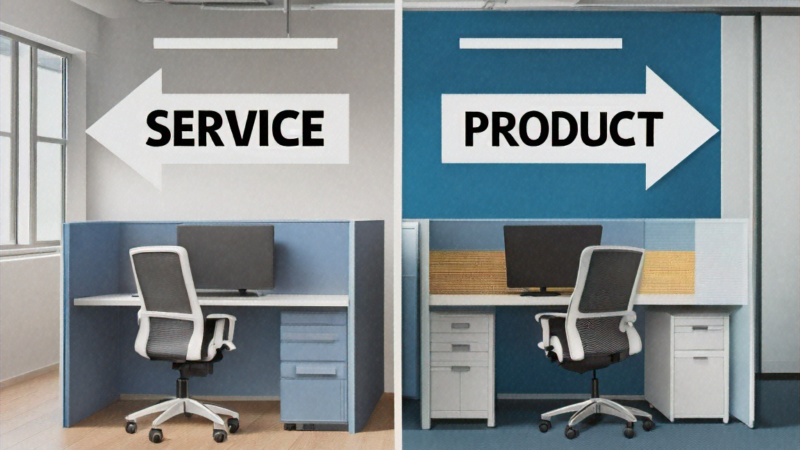
…so yeah, I was three years into my TCS stint when I started thinking about it seriously. Not in a dramatic “I need to escape” way, more like this slow realization that the work wasn’t going to change. Different clients, same patterns. And every time I’d scroll through LinkedIn and see someone from my college batch posting about joining Razorpay or Flipkart, I’d feel this weird mix of jealousy and motivation.
If you’re at a service-based company right now reading this, I probably don’t need to explain the itch. You already feel it.
Let me be straight about something. Making the jump from a service-based company to a product-based one is doable. Thousands of people do it every year. But it’s also harder than most LinkedIn influencers make it sound, and I think people deserve the honest version of what’s involved.
Why People Want to Leave (And Whether Those Reasons Hold Up)
Money is the obvious one. Product companies pay more. Sometimes dramatically more. An SDE-2 at a company like Google or Microsoft in India might earn 35-55 LPA, while someone with similar experience at a service-based company might be at 12-18 LPA. That gap is real, and it’s not just base salary — ESOPs (stock options) at product companies can double or triple your total compensation over a few years.
But it’s not just money. The work is different. At a service company, you’re often maintaining someone else’s code, working on projects that rotate every few months, and answering to client demands that don’t always make technical sense. At a product company, you typically own a feature or service end-to-end. You see your code in production affecting millions of users. There’s a sense of ownership that’s hard to get when you’re four layers deep in a client’s outsourced project.
Work-life balance is another factor, though this one’s more mixed than people admit. Some product companies (especially startups) have brutal hours. The “work-life balance” narrative is probably more true for the established FAANG-type companies than for a Series B startup trying to hit its next funding milestone. So be careful about assuming the grass is greener everywhere.
Career growth at product companies is also structured differently. You’re evaluated on technical impact, system design skills, and code quality rather than billable hours and client satisfaction scores. For engineers who genuinely love building stuff, this feels more authentic.
The Actual Differences You’ll Notice
I want to lay these out plainly because I think some people switch without fully understanding what changes.
Work Culture
Product companies tend toward flatter hierarchies. You might be two levels away from a VP instead of seven. Your ideas can actually reach decision-makers. Meetings are (usually) fewer and more focused. There’s an expectation that you’ll push back on bad ideas, not just nod and implement.
Service companies are more structured. Clear chains of command. Processes for everything. That’s not automatically bad — some people thrive in structured environments — but if you’re the type who wants to build something and see it ship quickly, it can feel suffocating.
Technical Depth vs. Breadth
At a service company, you might work with Java for one client, Python for another, dabble in cloud migration, do some database stuff. Jack of all trades. Product companies want depth. They want you to know your area cold — whether that’s distributed systems, search infrastructure, payment processing, or front-end performance. This shift in mindset trips up a lot of people making the transition.
You go from being someone who “knows a bit of everything” to being expected to know one or two things really well. That requires deliberate effort to build.
Compensation Structure
Service companies: base salary + annual bonus (usually 10-15% of base). Product companies: base salary + annual bonus + stock options (RSUs or ESOPs) + sometimes signing bonus. At senior levels, the stock component can be more than the base salary. A staff engineer at Google India might have a base of 50 LPA but total comp of 90-100+ LPA when you include stocks and bonuses. These numbers sound unreal until you see them on actual offer letters.
Okay, So How Do You Actually Make the Switch?
I’ll break this down into phases because it’s not something you knock out in a weekend. Expect to spend 4-6 months on serious preparation. Some people take longer. That’s fine.
Phase 1: Fix Your DSA (Data Structures and Algorithms)
This is the non-negotiable part. Product company interviews live and die on DSA. If you’ve been at a service company for a few years, your DSA is probably rusty. Maybe very rusty. No judgment — when your daily work is writing CRUD operations and debugging XML configurations, you don’t exactly keep your graph theory sharp.
Start with LeetCode. I know, everyone says this. But they say it because it’s true. Begin with Easy problems to rebuild your confidence and pattern recognition. Move to Medium after 2-3 weeks. Most product company interviews focus on Medium-difficulty problems, with the occasional Hard thrown in at companies like Google.
Topics to cover, in rough order of importance: Arrays and Strings (the bread and butter), Hash Maps, Two Pointers and Sliding Window, Linked Lists, Trees (binary trees, BSTs, traversals), Graphs (BFS, DFS, shortest path), Dynamic Programming (start simple — Fibonacci, knapsack, then work up), Stacks and Queues, Greedy Algorithms, Backtracking.
Aim for 300-400 solved problems total. Sounds like a lot, and it is. But you’re not going to do them all in a week. Two or three problems a day, consistently, for three to four months. Some days you’ll get stuck on one problem for hours. That’s normal. That’s actually the learning happening.
Striver’s SDE Sheet is wildly popular among Indian engineers, and for good reason — it’s 180 curated problems covering exactly what you need. GeeksforGeeks is great for understanding concepts. NeetCode is another solid resource with video explanations.
Phase 2: Learn System Design (If You’re SDE-2+ Level)
For roles at SDE-2 level and above (usually 3+ years of experience), system design interviews are a big deal. This is where you design large-scale systems from scratch — think “Design Twitter’s news feed” or “Design a URL shortener that handles 100 million requests per day” or “Design an online food ordering system like Swiggy.”
The good news: your service company experience actually helps here, weirdly enough. You’ve probably worked with databases, APIs, load balancers, and caching layers in some form. You just need to organize that knowledge into a framework.
Resources I’d recommend: “System Design Interview” by Alex Xu (both volumes are gold), Gaurav Sen’s YouTube channel for visual explanations, the System Design Primer on GitHub (free and thorough), and “Designing Data-Intensive Applications” by Martin Kleppmann for deeper understanding.
Practice by designing systems on a whiteboard or paper. Time yourself — 35-40 minutes per design, since that’s what you’ll get in an actual interview. Start with common ones: URL shortener, chat application, social media feed, e-commerce system, video streaming platform.
Phase 3: Build Your Profile Outside of Work
Your resume from a service company, honestly, doesn’t excite product company recruiters on its own. “Worked on maintenance of client’s billing system using Java Spring Boot” doesn’t exactly scream innovation. You need something more.
Open source contributions are huge. Find a project on GitHub that interests you — could be a popular library, a developer tool, anything — and start contributing. Even small contributions (fixing bugs, improving documentation, adding tests) show initiative and collaboration skills that product companies value.
Personal projects matter too. Build something. A full-stack web app, a CLI tool, a Chrome extension, a mobile app. Something you can demo and talk about in interviews. Extra points if it solves a real problem, even a small one.
Writing technical blog posts on Medium or Hashnode can also help. It establishes you as someone who thinks deeply about technical problems, and some recruiters actively search these platforms for candidates.
And update your LinkedIn profile. I know this sounds basic, but a lot of people underestimate how many product company recruiters find candidates through LinkedIn. Use keywords from job descriptions you’re targeting. Write a headline that’s more than just your current job title — something like “Backend Engineer | Distributed Systems | Open Source Contributor” catches more eyes than “Associate Software Engineer at TCS.”
Phase 4: The Application Strategy
Don’t just spray applications everywhere. Be strategic.
Referrals are by far the most effective way to get interviews at product companies. LinkedIn makes it easy to find people at your target companies who went to your college or previously worked at your current company. Reach out politely, explain your background, and ask if they’d be willing to refer you. Most people are surprisingly willing — companies pay referral bonuses, so it’s a win-win.
If you can’t get referrals, apply directly through company career pages (not just job boards). Tailor your resume for each application — I know that’s tedious, but it matters. Match the keywords in your resume to the job description. If they mention “microservices” and “AWS,” make sure those appear prominently in your resume if you have that experience.
Also consider these as entry points: companies like Flipkart, Razorpay, PhonePe, Cred, Atlassian, Intuit, Oracle, and Adobe all hire from service company backgrounds. They know service company engineers have solid fundamentals and work ethic. Some of these companies are probably easier to break into than Google or Amazon on your first attempt, and having them on your resume makes the next jump easier.
Timing your applications matters too. Most product companies have heavier hiring in January-March and July-September. These align with annual budget cycles and attrition patterns. Applying during these windows gives you more open positions to target and slightly better odds. Applying in November or December, when most teams have filled their headcount for the year, is harder — not impossible, but you’ll have fewer options.
Another tactical tip: apply to multiple companies simultaneously rather than sequentially. If you’re going to invest months in preparation, you want to maximize your interview pipeline. Having three or four interview processes running in parallel gives you better odds of getting at least one offer, and competing offers give you negotiating power. I’ve seen people accept the first offer they get out of excitement, only to realize a week later that another company would have paid 30% more.
Phase 5: Mock Interviews
Solving LeetCode problems alone in your room is very different from explaining your approach to a stranger on a video call while they watch you code. Mock interviews bridge that gap.
Pramp is free and pairs you with other people preparing for interviews — you interview each other. InterviewBit has a structured mock interview feature. Paid options like interviewing.io give you practice with actual engineers from top companies.
I’d suggest doing at least 10-15 mock interviews before your first real product company interview. Get comfortable with thinking out loud, handling hints, and managing your time. These are skills that practice on LeetCode alone won’t build.
The Timeline Nobody Tells You About
From “I’ve decided to switch” to “I have an offer letter” is usually 4-8 months for most people. Some do it faster if they were already strong on DSA. Some take a year or more if they’re starting from a weaker base or targeting only the top-tier companies.
During those months, you’re working your full-time job and studying 2-3 hours every evening plus weekends. It’s genuinely hard. There are weeks where you’ll feel stuck, where every LeetCode problem feels impossible, where you’ll wonder if this is even worth it. It is, probably. But I won’t pretend the journey is fun. Parts of it are a grind.
The people who make it are usually the ones who stick with a consistent schedule rather than going hard for two weeks and then burning out. Consistency over intensity. Two problems a day, every day, beats twenty problems in one weekend followed by nothing for three weeks.
What Changes After You Switch
Your salary goes up, obviously. Your work gets more interesting, usually. You feel more ownership over what you build. Your peer group is stronger, which pushes you to be better. Code reviews are more rigorous. Expectations are higher. The pace can be faster.
On-call rotations are common at product companies, which many people don’t think about before switching. If a service goes down at 3 AM, someone’s getting paged — and that someone might be you. At service companies, there’s usually a dedicated support team that handles production issues. At product companies, the team that built the service is responsible for keeping it running. It’s a different kind of accountability.
Performance reviews at product companies can feel more intense. You’re measured against specific, often ambitious targets. “Meets expectations” at Google isn’t the same as “meets expectations” at an average service company — the bar for what’s expected is simply higher. Some people find this motivating. Others find it stressful. Knowing which type you are before making the switch is probably worth some introspection.
The interview process itself is worth a mention here. Preparing for product company interviews while working full-time at a service company is exhausting. You’re doing your regular 8-9 hour workday, then coming home and grinding LeetCode for another 2-3 hours. On weekends, you’re studying system design or doing mock interviews instead of relaxing. This goes on for months. I know people who burned out during the prep phase and had to take breaks before trying again. Budget for this mentally before you start.
But some things are also… not better, exactly. Just different. Political dynamics exist everywhere. Bad managers exist at product companies too. Some teams have boring work even at Google. The dream of “perfect engineering culture” is mostly that — a dream. Every company has its problems.
I think the honest take is that switching from service to product is a net positive for most people who do it. But it’s not the magical career transformation that some LinkedIn posts make it seem. It’s a step up in pay, a shift in the type of work, and a different set of challenges replacing the old ones.
One more thing I’d mention. Don’t fall into the trap of thinking the only valid product companies are the FAANG giants. India has a growing ecosystem of product companies across different stages and domains. Zerodha, Razorpay, PhonePe, Cred, Meesho, Swiggy, Zomato, Dream11, Freshworks, Postman, BrowserStack — these are all product companies where engineers do meaningful work and earn well. Some of them are actually easier to get into than the Googles and Amazons, and having any product company on your resume makes the next move even easier.
Don’t let the perfect be the enemy of the good. If you’re at TCS and your first product company offer is from a mid-size startup paying 70% more than your current salary — that’s a win. You can always jump to a bigger name from there, with a year or two of product experience on your resume that makes you a much stronger candidate.
The transition from service to product is a marathon, not a sprint. Some people do it in four months. Some take eighteen. The ones who actually get there are the ones who decide it’s happening and then work toward it consistently, even when it’s boring, even when they’d rather watch Netflix, even when they fail an interview and want to give up…

Rajesh Kumar
Senior Career Counselor
Rajesh Kumar is a career counselor and job market analyst with over 8 years of experience helping job seekers across India find meaningful employment. He specializes in government job preparation, interview strategies, and career guidance for freshers and experienced professionals alike.



Comments
Be the first to leave a comment on this article.