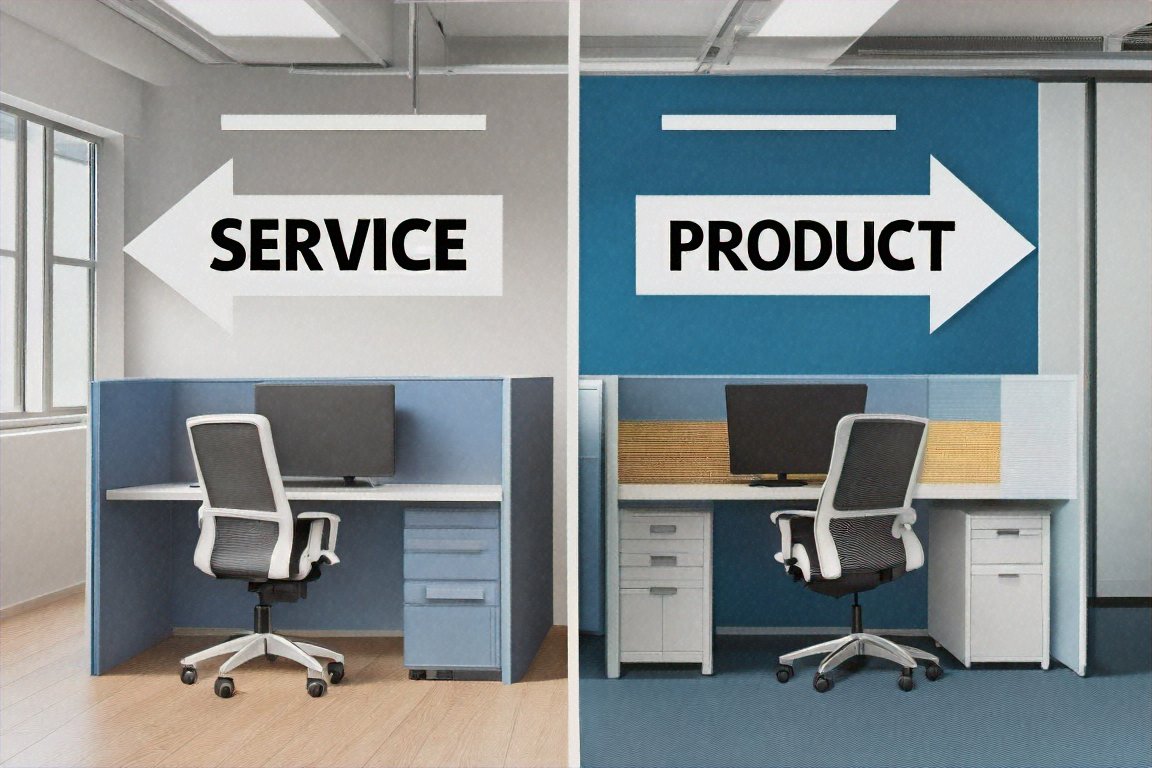
Two friends from my college batch made very different choices in 2020. Arun went into IT services — joined Infosys, moved to Bangalore, started at about 3.6 LPA. Seema decided to prepare for bank exams — moved back to her hometown in UP, enrolled in a coaching center, and spent the next fourteen months studying for IBPS PO while her parents quietly worried about whether she'd "wasted" her engineering degree.
Six years later, Arun is at about 12 LPA at a mid-tier product company. Good trajectory. No complaints. Seema cleared IBPS PO on her second attempt, got posted to a Bank of Baroda branch, and now earns about 9 LPA including all allowances. But she also has: a pension waiting for her at retirement, fully subsidized medical insurance for her entire family, housing allowance, 30+ paid leave days per year, a transfer to her home state, and the specific peace of mind that comes from knowing her job will exist tomorrow regardless of what the stock market does.
Neither of them made the wrong choice. They optimized for different things. And if you're reading this, you're probably considering the banking exam route and trying to figure out if it's the right optimization for you. Let me give you the actual picture — not the coaching institute sales pitch, and not the "government jobs are boring" dismissal you hear from the tech crowd.
The Bank Exam Ecosystem — Which Exam Leads Where
India's government banking recruitment is primarily run through three channels, and understanding which channel leads to which outcome is the first decision you need to make.
IBPS PO (Institute of Banking Personnel Selection — Probationary Officer) — This is the most popular bank exam. It recruits POs for about 11 participating public sector banks: Bank of Baroda, Canara Bank, Indian Bank, Punjab National Bank, Union Bank, and others. The process has three stages: Preliminary exam (quantitative aptitude, reasoning, English — 1 hour, 100 questions), Mains exam (reasoning, data analysis, general awareness, English, computer knowledge + descriptive test — 3 hours total), and an Interview round. The prelims are a speed test — the difficulty isn't high but the time pressure is brutal. Mains goes deeper, especially on data interpretation and reasoning. The interview carries significant weight in the final ranking.
Competition level: roughly 30-40 lakh candidates register annually for about 4,000-6,000 vacancies. The selection rate is somewhere around 0.15-0.2%. These numbers are intimidating, but context matters — a large chunk of registered candidates don't actually appear for the exam, and of those who do, many haven't prepared systematically. Your real competition is probably the top 2-3 lakh serious aspirants.
SBI PO (State Bank of India — Probationary Officer) — SBI conducts its own separate exam for the country's largest bank. The pattern is similar to IBPS but SBI is considered slightly more prestigious, and the exam is typically a notch harder. SBI PO positions are highly coveted because SBI generally offers better facilities, larger branches, and slightly better career growth than other PSBs. The process: prelims → mains → interview. About 20 lakh candidates compete for 2,000-odd positions.
RBI Grade B (Reserve Bank of India — Grade B Officer) — This is the premium government banking exam. RBI isn't a commercial bank — it's the regulator. Working at RBI means you're involved in monetary policy, financial supervision, foreign exchange management, and economic research. The exam is substantially different from IBPS/SBI: Phase 1 tests general awareness, quantitative aptitude, reasoning, and English. Phase 2 has papers on economic and social issues, finance and management, plus a descriptive English paper. Phase 2 is where most candidates struggle because it requires genuine knowledge of economics and finance, not just aptitude skills.
The starting compensation at RBI is around 10-12 LPA including allowances and perks — higher than IBPS/SBI PO starting salaries. RBI quarters in cities like Mumbai and Delhi are in prime locations that would cost lakhs in rent. The work is intellectually stimulating if you're interested in economics and policy. But the exam demands a different kind of preparation — you need to actually understand macroeconomics, monetary policy, banking regulation, and financial markets.
What Preparation Actually Looks Like
The core syllabus across IBPS, SBI, and most bank exams covers five areas: Quantitative Aptitude, Reasoning, English Language, General Awareness (especially banking and current affairs), and Computer Knowledge. The weight and difficulty vary by exam, but the foundation is the same.
Quantitative Aptitude is usually the section that makes or breaks candidates. Not because the math is hard — it's roughly Class 10-12 level — but because you need to solve problems in 30-45 seconds each. Number series, simplification, data interpretation, percentages, time-and-work, ratios — you need shortcuts and calculation speed that only come from intensive practice. R.S. Aggarwal's Quantitative Aptitude covers the basics. For bank-specific DI and data sufficiency, Arun Sharma's book is solid. Practice on apps like Testbook, Oliveboard, or Adda247 — they simulate the actual exam interface.
Reasoning is second in importance and includes puzzles, seating arrangements (circular, linear, floor-based), syllogisms, blood relations, coding-decoding, and direction sense. The puzzles and seating arrangements in mains-level exams can be genuinely tricky — multi-variable problems that require systematic approach, not just intuition. Practice 10-15 puzzles daily during the middle phase of your preparation.
English tests reading comprehension, cloze tests, para-jumbles, sentence correction, and fill-in-the-blanks. For non-native English speakers, this section needs dedicated daily practice — read editorials, practice error spotting, and build vocabulary gradually. Don't try to memorize word lists — read in context and the vocabulary will stick naturally.
General Awareness, specifically banking awareness and current affairs, is the section that separates serious aspirants from casual ones. You need to know: which bank merged with which, who's the current RBI governor, recent monetary policy changes, major government schemes, international economic events, and banking terminology. Build this knowledge daily — 30 minutes of current affairs reading plus a monthly banking awareness capsule from any competitive exam platform. Cramming this section at the end doesn't work because the volume of information is too large.
Study Timeline and Approach
Most successful candidates prepare for 8-14 months for their first serious attempt. Here's a realistic breakdown.
Months 1-3: Foundation building. Go through each subject systematically — learn concepts, understand solution approaches, build basic speed. This is the phase where you're building the knowledge base. Don't take full mock tests yet — you'll get frustrated by low scores when you haven't finished learning the material.
Months 4-7: Practice and speed building. Now you've covered the syllabus. Start doing topic-wise tests to identify weak areas, then full-length sectional tests. Take one full mock test per week and analyze it thoroughly — not just "I got 85/200" but "I spent too long on puzzle 3, my DI accuracy was only 60%, and I need to revise syllogisms." The analysis matters more than the test.
Months 8-12: Mock tests and revision. This is the exam-simulation phase. Take 3-5 full mocks per week. Time yourself strictly. Review every wrong answer. Revise your notes and formulas. Focus heavily on current affairs — the last 6 months of banking and economic news are most frequently tested.
Coaching vs self-study: this depends on your discipline and financial situation. Good coaching institutes (Paramount, Career Power, Oliveboard classes) provide structure, curated materials, and regular tests. Self-study with online resources (free YouTube channels like Adda247, paid test series from Testbook or Oliveboard at Rs 500-2000) can be equally effective if you're disciplined enough to maintain a consistent schedule without external accountability.
Exam Day Strategies That Separate Selectors from Near-Misses
I want to spend some time on exam day itself, because the difference between clearing the cutoff and missing it by two marks often comes down to strategy, not knowledge. I've seen people who knew the material inside out fail because they managed their time poorly during the exam, and I've seen slightly less prepared candidates clear the cutoff because they were strategic about which questions to attempt.
The prelims is a pure speed game. You have sixty minutes for one hundred questions across three sections, with sectional cutoffs. That's thirty-six seconds per question on average, but you shouldn't spend an equal amount of time on every question. In the first pass through each section, attempt only the questions you can solve in under thirty seconds — these are your confidence questions. Mark anything that looks doable but needs more time. Skip anything that looks like it'll take over a minute. In the second pass, go back to the marked questions. This two-pass approach ensures you don't get stuck on question 12 of reasoning while twenty easy questions in English sit unattempted. I've seen candidates score 65+ using this method when their practice test averages were around 55, simply because they stopped wasting time on questions that weren't worth the investment.
Negative marking changes the math in ways people underestimate. Each wrong answer costs you 0.25 marks. If you're guessing blindly among five options, your expected return per guess is negative. But if you can eliminate even two options, guessing becomes statistically profitable. The practical rule: if you can eliminate at least two wrong answers, attempt the question. If you're staring at five options with no clue, leave it blank. Over one hundred questions, disciplined handling of negative marking can swing your score by five to eight marks — and five marks is often the gap between qualifying and not.
For mains, the strategy shifts because the difficulty jumps significantly and the time pressure changes shape. The data interpretation section often has sets with five questions each. Some sets are straightforward — simple calculations with clear data. Others involve multiple tables, ratios, and percentage changes that eat up ten minutes for five questions. Identify the easier sets first by spending thirty seconds scanning each one before committing. Two straightforward DI sets completed accurately are worth more than one hard set done with mistakes.
The General Awareness section in mains is where most candidates either gain or lose their edge. There's no calculation here — you either know it or you don't. But the section has two distinct types of questions: static GK (banking terms, RBI functions, financial institution headquarters) and current affairs (recent policy changes, appointments, economic data). Static GK is finite and studyable — make flashcards for the two hundred most common banking awareness facts and review them daily for the last month. Current affairs requires consistent reading over the entire preparation period, but focus disproportionately on the last six months before the exam because that's where most questions come from.
Physical preparation matters more than people admit. The mains exam runs for three hours, and mental fatigue is real. If your practice routine involves taking breaks every forty-five minutes, your brain isn't conditioned for the sustained concentration the exam demands. In the last month of preparation, take at least two full-length mocks per week under strict exam conditions: no breaks, no phone, no snacks, timed exactly. Train your body and mind to perform for three continuous hours.
One small but practical tip about the exam day itself: reach the center at least forty-five minutes before reporting time. I know someone who missed the IBPS PO prelims because the center was in an unfamiliar part of the city, auto-rickshaw drivers didn't know the exact building, and he arrived eleven minutes after the gate closed. That's a year of preparation wasted over eleven minutes. Visit the center the day before if you can. Know exactly where it is, how to get there, and where to park or get dropped off.
Public Sector vs Private Banking — The Long-Term Comparison Nobody Makes Honestly
This is a comparison that comes up constantly in banking aspirant groups, and most discussions are biased in one direction or the other. Let me try to lay it out as honestly as I can, because the right answer genuinely depends on what you value.
Compensation trajectory over twenty years looks something like this. A PSB PO starts at 7-9 LPA and reaches 20-25 LPA as an AGM after about fifteen to eighteen years. A private bank relationship manager starts at 4-6 LPA but can reach 15-20 LPA within seven to eight years if they hit their targets, and top performers at banks like HDFC, ICICI, or Kotak can reach 30-40 LPA in senior management within twelve to fifteen years. So private banking pays more in the medium to long term for high performers. But the variance is much higher — average performers at private banks plateau at 12-15 LPA, while PSB officers reach similar numbers with less performance pressure through guaranteed pay commission increments.
Job security is where the comparison gets stark. In the last five years, multiple private banks in India have conducted layoffs, restructured teams, and pushed out underperformers. Yes Bank's crisis, Lakshmi Vilas Bank's merger, and various private bank branch consolidations have cost thousands of jobs. PSB employees are virtually immune to layoffs — even during economic downturns, the most that happens is a hiring freeze. For someone who values knowing with certainty that they'll have a paycheck next month, next year, and twenty years from now, that security has a value that's hard to quantify but very real.
Work-life balance tilts heavily toward PSBs for most employees, though this varies by branch and role. PSB working hours are generally 10 AM to 5 PM with genuine weekends off (though Saturday working varies by bank). Private banks often expect 9 AM to 7 PM or later, with sales targets that follow you home. Relationship managers at private banks frequently work weekends during quarter-end pushes. The intensity at private banks is higher, which either energizes you or exhausts you depending on your temperament.
Career variety is worth considering. Private banks offer more lateral movement — you can shift from retail banking to corporate banking to wealth management to treasury, sometimes even moving into fintech partnerships or digital banking roles. PSBs have more rigid role structures, and transfers between departments are less common until you reach mid-management. However, PSBs offer geographic variety through transfers across the country, which some people enjoy as an adventure and others find disruptive.
Here's something rarely discussed: what happens at retirement. A PSB officer who retires at 60 has a pension (for those under the old scheme) or a substantial NPS corpus, plus years of savings from subsidized housing and medical benefits. A private banker might earn more during their career but has no pension, pays full market rate for housing, and needs to self-fund retirement entirely. When you project total lifetime financial outcomes including post-retirement, the PSB path often looks more competitive than the raw salary numbers suggest — especially for people in Tier-2 and Tier-3 cities where the cost of living is lower.
The Career After Clearing the Exam
A bank PO starts at around 5-6 LPA in basic pay plus allowances — total compensation including HRA, DA, medical, and other benefits brings it to roughly 7-9 LPA depending on the posting city. This grows steadily through promotions: Manager (10-12 LPA), Senior Manager (14-16 LPA), Chief Manager (18-20 LPA), AGM (22-25 LPA). Reaching AGM typically takes 15-18 years.
The non-salary benefits are where PSB careers really stand out: pension (old pension scheme for pre-2020 recruits, NPS for newer ones), subsidized housing loans (at rates significantly below market), medical insurance for your entire family with no premium, 30+ days of leave annually, and genuine job security.
The day-to-day reality varies enormously by posting. A PO in a semi-urban branch might handle everything from account opening to loan processing to customer complaints. A PO in a large urban branch might specialize in one area. The work can be demanding during audit season and month-end reporting. Customer interactions range from pleasant to deeply frustrating. Transfers every 3-5 years mean relocating your life, which is either exciting or disruptive depending on your family situation.
Career alternatives within banking: after 3-5 years as a PO, some people write departmental exams for specialist roles (agricultural officers, IT officers, treasury managers). Others target promotions into mid-management. Some use their banking experience to move to private banks or fintech companies at higher salaries. And a few prepare for RBI Grade B alongside their job, which is challenging but opens the door to a more analytically stimulating career.
The honest bottom line: bank exams are fiercely competitive, the preparation demands sustained discipline over many months, and the job itself isn't glamorous. But for people who value stability, decent compensation, excellent benefits, and a clear career trajectory — especially outside of major metros where private sector options may be limited — a banking career through competitive exams is one of the most solid paths available in India. Whether that's the right trade-off for you is a deeply personal calculation.
Looking for Your Next Opportunity?
Browse thousands of verified job listings across India and find your dream career today.
Browse JobsRajesh Kumar
Experienced HR professional and career coach. Former recruitment head at a Fortune 500 company. Passionate about helping freshers start their careers.
Comments
No comments yet. Be the first to share your thoughts.
Leave a Comment
All comments are moderated before publication.
Related Articles

How to Build a Personal Brand for Career Growth
May 21, 2026