How to Become a Project Manager: Skills and Certifications

Three years into my career as a software developer, I realized something about myself that changed my trajectory: I was more excited about figuring out how to organize the sprint, unblock my teammates, and coordinate with the product team than I was about writing the actual code. Every standup, I'd naturally drift toward asking "what's blocking this?" and "who needs to talk to whom to get this moving?" My tech lead noticed before I did. "You know," she said one afternoon, "you might be a project manager trapped in a developer's body."
That observation set me on a path I hadn't planned. I started reading about project management, shadowed our PM on a few client calls, took on coordination responsibilities that nobody else wanted, and eventually made the switch. It wasn't smooth — there's a real identity shift involved in going from "the person who builds things" to "the person who makes sure things get built" — but it turned out to be the right career move for who I actually am, not who my engineering degree assumed I'd be.
I'm not 100% sure on this, but if you're considering a similar transition — or if you're earlier in your career and project management sounds interesting — here's what the role actually involves, what you need to get there, and what nobody tells you about doing it well.
What Project Managers Actually Do (Not What Job Descriptions Say)
Job descriptions for PM roles typically list things like "manage project timelines," "coordinate stakeholders," and "ensure deliverables meet quality standards." That's technically accurate and completely unhelpful in understanding what the day-to-day actually feels like.
In practice, a project manager's job is about three things. First, making sure the right people know the right things at the right time. This sounds simple. It's not. In any project of meaningful size, information is constantly being generated — decisions made, requirements changed, risks identified, blockers encountered — and if that information doesn't reach the people who need it, things go wrong. A huge part of the PM role is being the central nervous system: taking in information from everywhere and routing it to where it matters.
Second, identifying and solving problems before they become crises. Good PMs are paranoid optimists — they believe the project will succeed, but they're constantly scanning for what could go wrong. Is this vendor going to deliver on time? Is this technical approach going to hit a wall? Is this stakeholder going to change their mind about the requirements? The best PMs I've worked with catch problems when they're small and solvable, not when they've already blown up the timeline.
Third, making decisions (or getting decisions made) when there's ambiguity. Projects are full of situations where no one is sure what to do: the scope is unclear, resources are constrained, stakeholders disagree, or the timeline conflicts with quality expectations. The PM doesn't always make the decision themselves — often they help with the decision by framing the options, presenting the trade-offs, and getting the right people in a room. But they own the responsibility of ensuring that decisions get made rather than deferred into oblivion.
The Skills That Actually Matter
Communication. If there's one skill that defines a good PM, it's this. You need to explain technical concepts to business stakeholders who don't share your vocabulary. You need to translate business requirements into something engineers can build. You need to write clear emails, run efficient meetings, give honest status updates (including bad news), and listen — really listen — when someone tells you about a problem. I'd estimate that 60-70% of my time as a PM involves some form of communication. If you don't enjoy talking to people, writing things down, and being in meetings, this might not be your career.
Organizational thinking. The ability to break a large, complex goal into smaller tasks, sequence them logically, assign them to the right people, and track progress without micromanaging. This is harder than it sounds because real projects don't follow neat sequences — there are dependencies, parallel workstreams, changing priorities, and unexpected delays. A PM needs to hold the big picture in their head while managing dozens of moving details simultaneously.
Stakeholder management. Every project has multiple stakeholders — the client, the engineering team, the designer, the QA team, senior management, sometimes legal or compliance — and they often want different things. The PM's job is to balance these competing interests, manage expectations, and keep everyone aligned on what's being built and why. This requires emotional intelligence, political awareness, and the ability to say "no" diplomatically.
Risk management. Identifying what could go wrong, assessing the likelihood and impact, and planning mitigations before the risk materializes. This skill develops with experience — after you've seen enough projects, you develop a sixth sense for which risks are real and which are theoretical. But even as a beginner, actively asking "what could go wrong here?" and documenting the answers puts you ahead of most project teams.
Tool proficiency. You need to be comfortable with project management tools: Jira (the standard for tech projects), Asana and Monday.com (popular for non-tech), Microsoft Project (for traditional industries), Confluence or Notion (for documentation), and Slack/Teams for communication. You don't need to master all of them — most companies use 2-3 — but being able to pick up a new tool quickly is expected.
Methodologies — Agile, Scrum, Waterfall, and When Each Applies
Agile is a philosophy, not a process. It values responding to change over following a plan, working software over documentation, and collaboration over rigid processes. Most tech companies in India claim to be "agile," though what that means in practice varies wildly.
Scrum is the most popular implementation of Agile. Work is organized into sprints (usually 2-week cycles), with defined ceremonies: sprint planning (what will we build?), daily standups (what's happening? what's blocked?), sprint review (what did we build?), and retrospective (how can we improve?). The Scrum Master runs these ceremonies and removes blockers. Understanding Scrum is basically mandatory for PM roles at tech companies.
Kanban is another Agile approach that focuses on visual workflow management (board with columns: To Do, In Progress, Done) and limiting work-in-progress. It's less structured than Scrum and works well for teams with continuous work rather than project-based work (like support teams or content teams).
Waterfall is the traditional sequential approach: requirements → design → build → test → deploy. It works when requirements are well-defined and unlikely to change (construction, manufacturing, some government projects). Most tech PMs learn Waterfall in theory but use Agile in practice.
A Typical Day — What PM Life Actually Looks Like
I'll walk you through what a typical Tuesday looks like for me, because the day-to-day reality of project management is very different from what certification courses describe. Morning starts with checking Slack messages and emails that came in overnight — our team works across time zones, so by 9:30 AM I've usually got three or four things that need my attention. A developer in our Pune office hit a blocker at 11 PM and needs an API credential from the client. A designer in Bangalore shared mockups and is waiting for feedback from the product owner. The QA lead flagged two bugs from yesterday's build that might push the release date.
By 10 AM, I've responded to the developer (escalated the credential request to the client's IT team with a "needed by noon" note), pinged the product owner about the mockups, and assessed the QA bugs — one is cosmetic (won't affect release), the other is a data issue that needs a developer's eyes. Then comes the daily standup at 10:30 AM: fifteen minutes where each team member says what they did yesterday, what they're doing today, and what's blocking them. My job during standup isn't to solve problems — it's to note them and solve them after the meeting, so we don't turn a 15-minute standup into a 45-minute discussion.
I think the middle of the day is meetings. A status call with the client at 11 AM (where I present progress, flag the potential delay from the QA bug, and propose a mitigation plan before they have to ask). A resource planning session at 1 PM with other PMs, negotiating for a senior developer who's needed on two projects simultaneously. A backlog grooming session at 3 PM where the team estimates upcoming work and I make sure the stories are clearly written and have acceptance criteria. Between these meetings, I'm updating the project tracker, writing meeting notes, following up on the morning's blockers, and having quick Slack conversations that prevent small misunderstandings from becoming big problems.
By 5 PM, I try to do what I call "tomorrow planning" — looking at the next day's schedule, checking if any deadlines are approaching, and making sure nothing has slipped through the cracks. Some days end at 5:30. Others stretch to 8 PM because a production issue came up or a client sent a change request that needs to be assessed before tomorrow's sprint planning. The variety is what I enjoy about the role, but it also means you rarely have long uninterrupted blocks of focus time. If you need three hours of silence to do your best work, PM might frustrate you.
PM Work Across Different Industries
It seems like project management looks very different depending on your industry, and this is something most career guides don't talk about. The core skills transfer, but the pace, tools, stakeholder dynamics, and definition of "done" vary dramatically.
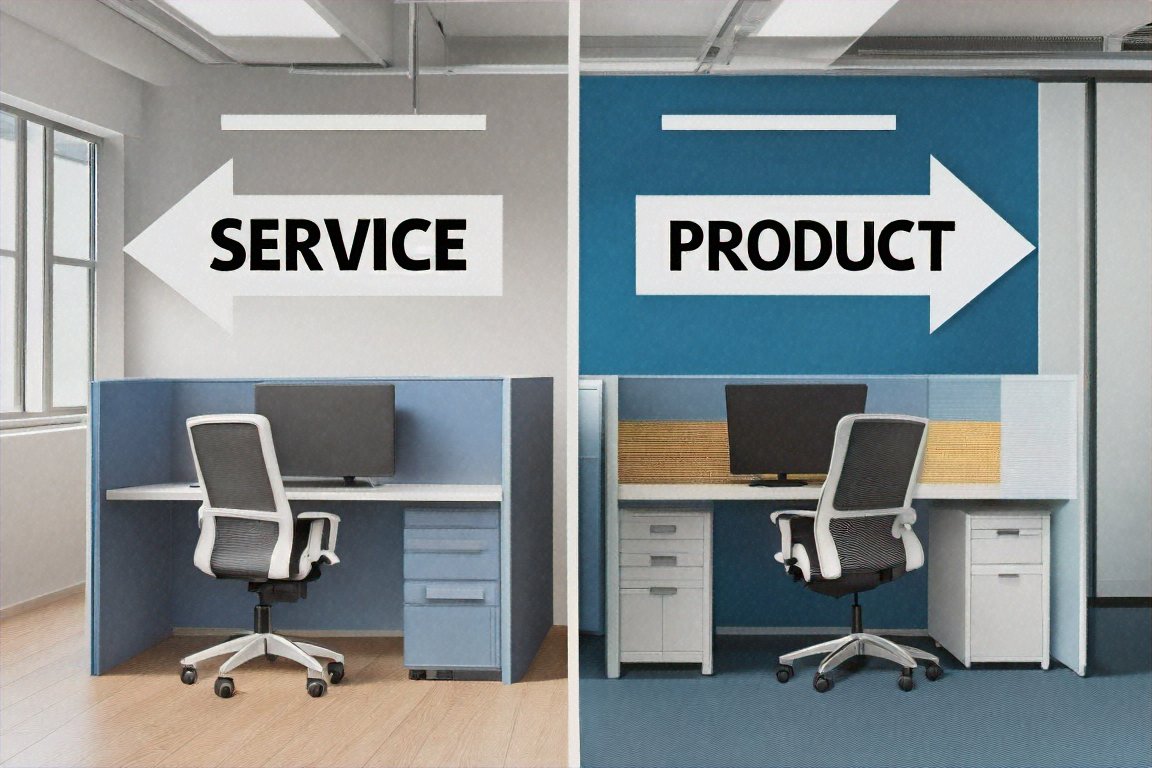
IT Services (TCS, Infosys, Wipro, HCL): PMs here manage client-facing delivery teams, often working on outsourced development or maintenance projects. The work is heavily process-driven — there are documentation standards, SLAs (service level agreements), and compliance requirements that you can't skip. You'll spend more time on status reports, change request management, and contract-related discussions than a PM at a product company would. The good side: you get exposure to many different clients and industries. The downside: the work can feel bureaucratic, and your authority is often limited because the client holds significant decision-making power. Career progression tends to follow a defined ladder with clear criteria at each level.
Product Companies (startups, tech companies): Here, the PM role blurs with product management. You're not just tracking timelines — you're often involved in deciding what to build, how to prioritize features, and how to measure success. The pace is faster, the processes are lighter (sometimes too light — "move fast and break things" sounds exciting until you're the one cleaning up the broken things). Decision-making is more collaborative and less hierarchical. You might be in a standup with the CTO at a 50-person startup, making real-time trade-off decisions that would take three weeks of approvals at a services company. The uncertainty is higher, but so is the ownership.
Consulting (Big Four, boutique firms): PMs at consulting firms manage client engagements, which means every project has an inherent sales dimension — you're not just delivering the current project but also building the relationship for future work. The pressure on timelines is intense because consulting engagements are billed by the hour or by milestone, and overruns directly hurt the firm's margins. You'll work with clients across industries, which builds breadth of experience quickly. The trade-off is work-life balance — 50-60 hour weeks are standard, and travel was heavy pre-COVID (it's returning, though less than before).
Manufacturing and Construction: Project management in physical industries follows more traditional methodologies. Waterfall or hybrid approaches are common because you can't "iterate" on a bridge or a factory floor the way you can on software. The planning phase is longer and more detailed, the cost of mistakes is higher (you can't just deploy a hotfix to a building), and the stakeholder map includes contractors, regulators, safety officers, and unions. PMs here need strong understanding of procurement, logistics, and regulatory compliance — skills that tech PMs rarely develop.
Certifications — Which Ones Help
PMP (Project Management Professional) — The gold standard, issued by the Project Management Institute (PMI). Requires 3-5 years of project management experience (depending on your education level) and passing a rigorous exam. PMP is recognized globally and carries real weight with employers — particularly in traditional industries (IT services, consulting, construction, pharma) and for senior PM roles. Study time: 2-4 months. Cost: about Rs 35,000-40,000 for the exam plus application fees.
CAPM (Certified Associate in Project Management) — PMI's entry-level certification. Doesn't require work experience, making it accessible to recent graduates and career changers. It covers the same body of knowledge as PMP but at a foundational level. Good for signaling interest in PM without having the experience for PMP yet.
CSM (Certified Scrum Master) — A 2-day course plus a simple exam. Teaches Scrum fundamentals and the Scrum Master role. The certification itself is easy to get, but the knowledge is genuinely useful for anyone working in Agile environments. Widely recognized in Indian tech companies.
PSM (Professional Scrum Master) — Scrum.org's alternative to CSM. Self-study with a harder exam (no mandatory course). More respected among practitioners because the exam actually tests understanding rather than just attendance.
Google Project Management Certificate (Coursera) — Free to audit, paid for the certificate. Covers project management fundamentals, Agile methodology, and practical tools. No experience required. Excellent starting point for anyone exploring PM as a career — the curriculum is well-structured and the certificate is recognized by employers who value Google's brand.
Career Path and Salary
The typical progression: Project Coordinator (entry-level, 3-5 LPA, handling logistics and tracking) → Project Manager (mid-level, 8-15 LPA, owning project delivery) → Senior Project Manager (managing complex or multiple projects, 15-25 LPA) → Program Manager (managing portfolios of related projects, 25-40 LPA) → PMO Head or VP of Delivery (senior leadership, 35-50+ LPA).
Industry affects salary significantly. IT services companies (TCS, Infosys, Wipro) pay PMs at the lower end of these ranges. Product companies (Amazon, Flipkart, Swiggy) and consulting firms (Big Four, MBB) pay at the higher end. Banking and pharma fall in between.
An alternative career path: Technical Program Manager (TPM) at tech companies. TPMs combine deep technical understanding with program management skills. They manage cross-team technical initiatives, resolve technical dependencies, and drive engineering strategy. TPM roles at companies like Google, Amazon, and Microsoft are among the highest-paid PM roles, with compensation reaching 40-60+ LPA for senior positions.
Making the Transition
If you're currently a developer, designer, analyst, or in any other individual contributor role and want to move into PM: start by taking on coordination responsibilities within your current team. Volunteer to run standups, manage the sprint board, coordinate cross-team dependencies. This gives you PM experience without requiring a formal title change, and it tests whether you actually enjoy the work (some people discover they prefer building to coordinating, and that's perfectly fine).
Document everything you learn about project dynamics, stakeholder management, and process improvement. This becomes material for your PM resume and interview stories. When you apply for your first formal PM role, you'll have concrete examples: "I managed the migration from Jira to Monday.com for our team, reducing tracking overhead by 30%," or "I coordinated a cross-functional team of 8 people across 3 time zones to deliver a feature on time."
The shift from individual contributor to project manager is a shift in what "productivity" means. As a developer, productivity is code shipped. As a PM, productivity is invisible — it's the meeting that prevented a misunderstanding, the risk register that caught a problem early, the stakeholder conversation that realigned expectations before they diverged. It took me about six months to stop feeling guilty about not writing code and to recognize that the PM work I was doing was equally valuable. If you make this transition, give yourself that adjustment period. The identity shift is real, and it's okay if it takes time.
Looking for Your Next Opportunity?
Browse thousands of verified job listings across India and find your dream career today.
Browse JobsRajesh Kumar
Experienced HR professional and career coach. Former recruitment head at a Fortune 500 company. Passionate about helping freshers start their careers.
Comments
No comments yet. Be the first to share your thoughts.
Leave a Comment
All comments are moderated before publication.
Related Articles

How to Build a Personal Brand for Career Growth
May 21, 2026