Career Opportunities in Electric Vehicle Industry in India
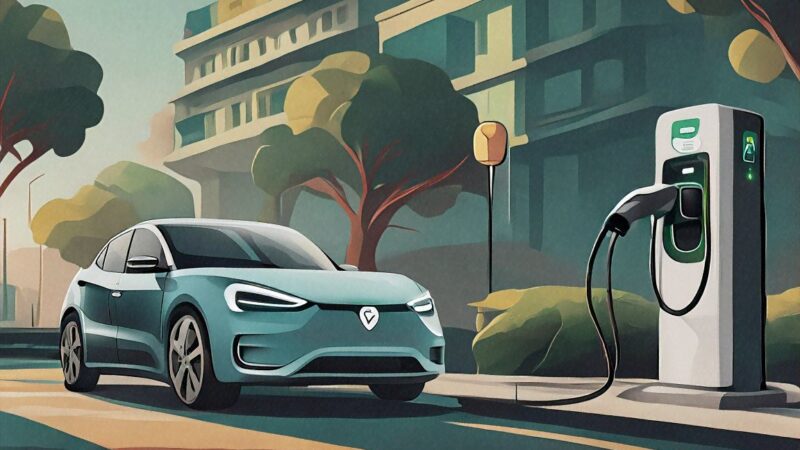
Tata Motors delivered their 200,000th EV in India last month. Two hundred thousand.
I keep coming back to that figure because of where we were not long ago. When I started tracking this industry in 2022, the debate was still whether electric vehicles were even “viable” in Indian conditions, the heat, the range anxiety, the charging deserts. Everyone had a tidy reason to be skeptical. And now an automaker that spent decades building petrol and diesel cars has crossed a milestone most analysts, me included, didn’t pencil in this early.
Something structural moved. What changed isn’t only what people are buying; it’s the economic skeleton of the entire automotive industry here. And when the skeleton moves, jobs follow it. A lot of jobs. I’m genuinely excited about this, but I also cover it for a living, so let me stay grounded: there’s plenty of hype around EVs and not all of it maps to anything real yet. What follows is where I think the actual work is, and how you’d position yourself for it.
the numbers, and which ones to trust
The headline projection is that the Indian EV market hits $150 billion by 2030, on a compound growth rate hovering near 45%. Those are the kind of figures that make a venture capitalist start breathing funny. They’re also just projections, educated guesses dressed up in decimal places, so I hold them loosely.
The number I trust more is closer to home: EV-related job listings on our own Jobwala24 board climbed about 180% over the past year. That’s not a forecast. Those are real companies posting real roles at real salaries, and the spread is what struck me, the postings come from established automakers, pure-play EV startups, battery makers, charging companies, and the adjacent industries that ride along, insurance, fleet management, energy.
Policy is part of why. FAME II (the subsidy scheme for adoption and manufacturing) has been feeding the ecosystem, and the Production Linked Incentive scheme for advanced chemistry cells, which is policy-speak for “make batteries here,” has pulled in serious investment. State governments are practically competing to out-sweeten each other on EV policy. Is all of it sustainable? Probably, though I’d be lying if I called it risk-free. We’re still leaning hard on China for battery materials. Charging coverage in Tier-2 and Tier-3 towns is patchy. And a lot of EV startups still haven’t figured out how to actually make money. The direction looks settled to me. The timeline is the part I won’t bet on.
the companies worth knowing, because that’s where the jobs live
A quick map of the ecosystem, since knowing the players tells you where to aim.
Tata Motors is the giant in the room. The Nexon EV more or less created the Indian four-wheeler EV market, and the combination of first-mover position, manufacturing scale and the Tata name makes a job there the closest thing to a “traditional” career in this space. They’re hiring across engineering, manufacturing and commercial roles, and hard. Mahindra Electric has actually been at this longer than most people remember, with a strong commercial EV portfolio (electric three-wheelers, small commercial vehicles) and an expanding SUV line; it tends to draw engineers who like working across a range of vehicle platforms.
Then there’s Ola Electric, the wild card. They arrived with electric scooters and outsized manufacturing ambitions, and the Futurefactory in Tamil Nadu is among the largest two-wheeler plants on the planet. People feel strongly about Ola in both directions, but they’ve created thousands of jobs and forced the whole industry to move quicker. The culture is fast, demanding, startup-ish, which suits some people and burns out others. Ather Energy is the engineer’s favourite, started in a dorm at IIT Madras and now one of the most respected EV brands going, with deep vertical integration, they design their own battery packs, motor controllers and vehicle software in-house. If you want hard technical problems at a place that treats craftsmanship seriously, it’s tough to beat. And TVS has quietly built a real EV portfolio; the iQube scooter sells well, and its manufacturing depth and dealer network give it a distribution edge the pure startups keep struggling to match.
Past the vehicle makers sits a whole supporting layer most coverage skips, the battery cell makers, the pack assemblers, the motor manufacturers, the charging network operators, the EV financing companies. Every one of those is a distinct career path, and several are hiring harder than the famous brands.
engineering: where the core problems are
If the EV is a body, the battery is the heart, and it turns out hearts are complicated. Battery engineering is the single hottest specialisation in the Indian EV industry right now, demand far outruns the supply of qualified people, and salaries say so, roughly 8-30 LPA depending on experience and depth. It splits a few ways. Battery Management Systems, the BMS, is the brain that watches and controls the pack, cell balancing, state-of-charge estimation, fault detection, thermal control, and it wants a mix of electrical engineering, embedded systems and control theory. Get it wrong and you get thermal runaway, which is the polite term for the battery catching fire. Thermal management is its own discipline, and a uniquely Indian one, because the cooling design that keeps cells happy in California falls apart in Rajasthan in May; it leans on CFD, heat-transfer analysis and materials science. And cell chemistry is the deep-science end, optimising the electrochemistry inside the cell, mostly done in China and Korea today, but the PLI scheme is pulling that manufacturing here, and the engineers who understand cells will be wanted badly as those factories come online.
Power electronics is the next big lane. Every EV has to turn battery energy into motion at the wheels, and the parts that do it, motor controllers, inverters, DC-DC converters, onboard chargers, are pure power electronics. Deep knowledge pays here. You need semiconductor devices (IGBTs, MOSFETs, SiC), control algorithms like FOC and SVPWM, electromagnetic compatibility. It’s genuinely hard, companies can’t find enough people, and if your background is strong they want you yesterday. Embedded systems is the other surprise. A modern EV runs more code than people expect, dozens of electronic control units handling charging, regenerative braking, climate, the instrument cluster. Engineers who can program microcontrollers, work with CAN bus and LIN bus, write firmware and debug the messy seam where hardware meets software are in heavy demand. I’d argue the work is more satisfying than web development, honestly, because you’re writing code that moves something physical.
Charging infrastructure is the part I think is underrated relative to the opportunity. You can build the best EV on earth, but if there’s nowhere to plug it in, nobody buys it, which is exactly why charging is scaling as fast as the vehicles. Tata Power, ChargeZone, Statiq and Ather Grid are laying networks across the country, and the roles are mixed, electrical engineers designing stations, civil engineers planning sites, software engineers building the payment and session backends, field technicians installing and maintaining hardware. It sits where energy, technology and real estate overlap, deciding where chargers go, managing grid load, handling billing across networks, and those are knotty problems that need good people. A worked example of why it’s hard: put a bank of fast chargers in a market without checking the local transformer’s capacity and you can brown out the street, so site planning is half electrical engineering and half negotiation with the discom. Then there’s the interoperability headache, a driver shouldn’t need six apps for six networks, which is its own software and standards problem that someone has to own. None of this is solved yet, which is exactly why I’d point a sharp graduate here over a more crowded battery role.
There’s also the unglamorous engine of all this, supply chain and manufacturing. Going from a hundred vehicles a month to ten thousand is a supply-chain and operations challenge as much as an engineering one, and lean manufacturing experience, Six Sigma, and the automotive quality standard IATF 16949 are valued. Industrial and manufacturing engineers, the industry needs you more than it advertises.
the roles nobody puts on the poster
Here’s what gets lost under all the battery-engineer coverage: for every engineer designing a cell, several non-engineers are making the business actually function, and those careers are growing just as fast.
Selling an EV isn’t selling a petrol car. The customer’s worried about different things, range, charging time, battery degradation, resale, so companies need salespeople who can genuinely explain the value, not just quote a price. On the marketing side, EV brands are pouring money into digital, content and community. Policy and regulatory is its own specialised world, FAME II, state policies, emission norms, safety rules, charging standards, all of it shifting, and firms need people who can track it, shape it, and keep the company compliant, which wants a blend of legal knowledge, government relations and industry sense. Data and AI roles are everywhere, because EVs throw off enormous data, battery telemetry, driving patterns, charging behaviour, vehicle diagnostics, and companies mine it for predictive maintenance, for fleet optimisation, for sharper range estimation. The ones building actual self-driving features (still early in India, but coming) treat AI expertise as table stakes. And finance is quietly being reinvented here, battery-as-a-service (you buy the vehicle, lease the battery) is gaining ground, leasing and subscription models look nothing like traditional auto finance, and green bonds are funding the infrastructure. If you work in finance and want an industry that’s actually rewriting its own economic models, this is one.
what gets you in the door
For the engineering roles, a degree in electrical, electronics or mechanical engineering is the baseline, but a degree alone won’t cut it, because the industry moves fast and employers want specific, demonstrable skills. The same tools keep surfacing in job postings. MATLAB and Simulink for system modelling, control design and simulation, all but non-negotiable if you’re targeting battery, power electronics or vehicle dynamics. AutoCAD and SolidWorks for the mechanical design roles, from battery enclosures to chassis to charging-station housings. Python shows up nearly everywhere, in data work, in automation, in test rigs, and knowing it gives you an edge whatever your discipline. For embedded roles, AUTOSAR and the automotive protocols, CAN, LIN, Ethernet. For hardware in power electronics and BMS, PCB tools like Altium or KiCad.
Certifications can nudge you forward too. IIT Madras and ARAI, among others, run EV-specific courses. They won’t replace a real engineering foundation, but they signal that you’re serious about the space, which matters when a recruiter is skimming two hundred résumés. Geographically, the industry clusters. Bangalore is the biggest hub, Ather, Bosch, Continental and a swarm of startups, riding the city’s software and electronics talent. Pune carries its old automotive-capital legacy into EVs with Tata Motors, Bajaj Auto and a wall of component makers. Chennai has Ola’s vast plant plus Hyundai and Renault-Nissan and a growing supplier cluster. Ahmedabad is rising on Gujarat policy and proximity to Sanand, where Tata has a major plant. And there are smaller pockets, Coimbatore for motors, Jaipur for startups, Hyderabad for battery research, and the map keeps spreading as the industry grows.
if you’re switching in, not starting out
A fair chunk of the people who email me about EVs aren’t fresh graduates. They’re mechanical engineers at a legacy auto company, or embedded developers in some unrelated industry, or sales managers who’ve watched their petrol-car market flatten and want to jump before the jumping gets crowded. So a word on lateral entry, because it’s more doable than the fresh-grad framing suggests.
The cleanest crossover is for power-electronics and embedded people, because those skills transfer almost intact, an inverter is an inverter whether it’s in a solar setup or a motor controller, and CAN bus doesn’t care what industry taught it to you. If that’s your background, the move is mostly about learning the EV-specific context (battery behaviour, the safety constraints, the regulatory norms) and signalling it on your résumé. Mechanical engineers come in through thermal, through structural design of packs and enclosures, through the manufacturing and quality side where IATF 16949 experience is gold. The harder pivot, honestly, is for pure IT-services people with no hardware exposure, but even there the data and software-backend roles at charging companies are a realistic on-ramp; you’re writing the payment and session systems, not designing a battery, and that’s web and backend work wearing an EV badge.
What I’d actually do, if I were switching: pick one of the named hubs you can realistically live in, target the supporting ecosystem rather than only the famous brands (a charging company or a component supplier will often take a switcher the big names won’t), and put one concrete EV project on your résumé even if it’s a personal one, a BMS you simulated in Simulink, a small charging-station dashboard you built. The thing that gets a switcher hired isn’t a certificate. It’s evidence that you’ve already started thinking in this industry’s terms before anyone paid you to.
the questions I don’t have answers to
I want to end somewhere other than “the future is bright,” because the honest picture has open questions in it that will decide what this industry looks like in five years.
Will India actually build a domestic battery-cell industry, or stay dependent on Chinese and Korean imports? That single answer could create, or quietly strangle, hundreds of thousands of jobs. What happens when the first big wave of EVs reaches end-of-life? Battery recycling and second-life use are barely nascent here, which is both a problem and a whole industry waiting to be built. How does the grid cope when millions of vehicles charge at once? Vehicle-to-grid, smart charging, renewable integration, the seams between EVs and the power sector could spawn careers that don’t have names yet. And there’s the geopolitics, as countries fight over EV supply-chain dominance, India’s place in the global automotive order is in flux. Will it become an EV manufacturing exporter the way it became an IT-services exporter? If it does, the career implications go global.
I don’t have clean answers to any of that, and anyone who claims they do is selling something. But the people building careers in this industry today are the ones who’ll end up shaping those answers, which strikes me as a fairly good reason to get in now rather than read about it later. If you’re considering the move, start by mapping your existing skills onto where the industry actually hurts for people, check the EV listings on Jobwala24, sit in on the EV communities on LinkedIn and Reddit, get to an Auto Expo or EV India Expo and talk to people who are already inside. The next milestone announcement might be one you helped make happen instead of one you scrolled past.

Ananya Patel
Tech industry analyst and career writer. Covers latest trends in IT, data science, and emerging technologies. B.Tech from IIT Delhi.
Share this Article
Comments
No comments yet. Be the first to share your thoughts.
Related Articles

Women in Tech: Breaking Barriers in Indian IT Industry
January 24, 2026
Gig Economy in India: Opportunities and Challenges
January 14, 2026
Leave a Comment